

Every artist has tips, tricks, and best practices that help to make them the master of their craft. Rug artisans are no different; weavers often spend untold hours perfecting their trade. Today, we want to take a deep dive into the craftsmanship that is the art of Balouch rug weaving. From materials to the process, let’s unpack these details together.
A Note on Persian Rugs
We wanted to briefly mention that Balouch rugs fall under the broader category of Persian rugs. Many Balouchi people can trace their history to Iran and the greater Ottoman Empire, which is why Balouch rugs are classified as Persian instead of Oriental.
A Culture that Values Handmade Art
One of the defining features of any high-quality rug is a preference for handmade processes. Whether Turkish, Kazak, or another type, the best rugs in the world are handmade. Balouch rugs are no different, though there is a nuanced variation here.
Unlike many other rug families, many Balouch rugs on today’s market are vintage, most predating the possibility of being machine-made. The art of Balouch rug weaving, combined with the cultural practices of current artisans, will always be reflected through its handmade culture.
Natural Fibers
Along these same lines, artisans of the past and present both preferred to use natural fibers over any synthetic counterpart. This means the traditional rug weaving materials of silk, cotton, and wool are often seen within Balouch rugs. As a fourth option, camel hair is also a popular choice here.
Natural Dyes
Lastly, those who consider rug weaving to be an artistic craft would rarely choose synthetic dyes. Instead, many (if not all) of them will prefer natural vegetable-based dyes. This makes their rugs more eco-friendly and better for your family’s health.
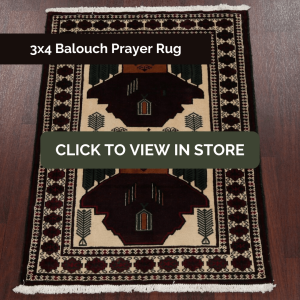
The Baluchistan region is one of the world’s more harsh climates. This means that many of the color choices you’ll see reflect this cultural detail with reds, browns, and blues, along with contrasting colors present in many rugs.

An Intricate Weaving Process
Finally, let’s talk about the traditions surrounding the weaving process. In most cases, weavers use horizontal, collapsible looms. This portability made their equipment more accommodating of the nomadic lifestyle. As a rug was weaved back and forth across the loom, if they needed to leave, the rug would be wrapped around the beams. Once they arrived at their new home, they would unpack and continue the weaving process.
Summarizing the Art of Balouch Rug Weaving
If there were a word that best summed up the art of Balouch rug weaving, it would be tradition. Whether it’s the traditions that come via the melting pot that is the Balouchi people or the simple process of creating the rules themselves, the process of creating beautiful Balouch rugs is full of history and culture.
If you want to add one of these masterpieces to your home, you’ve come to the right place. Click here to browse our inventory or see them in person at our showroom!