All About Kilim Rugs: History, Craft, and How to Choose the Perfect Piece

Why Kilim Rugs Win on Style and Function
Kilim rugs are flat-woven textiles with centuries of tradition and a surprisingly modern attitude. Because they’re pileless, lightweight, reversible, and durable, kilims slip into today’s homes with ease, whether you’re layering one over hardwoods, hanging it as art, or bringing pattern to a minimalist space.
At Rug Source, we carry an extensive selection of authentic kilim rugs alongside related tribal and flat-weave pieces, so you can find the right size, color story, and provenance for your home.

What Makes a Kilim a Kilim?
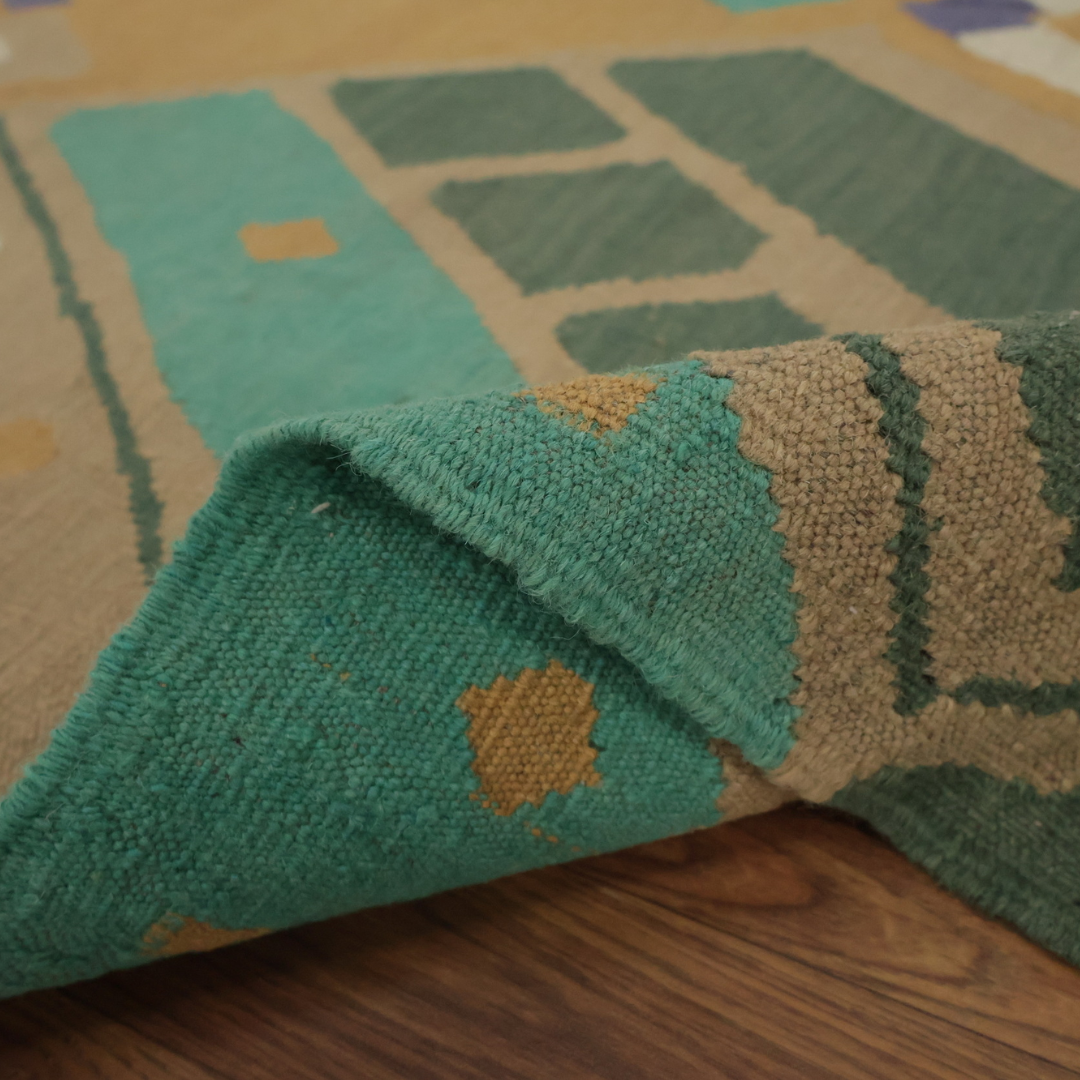
Unlike hand-knotted “pile” carpets, kilims are flat-woven using a weft-faced plain weave: the horizontal weft yarns are beaten down to cover the vertical warps, creating a sleek, pileless surface. Most traditional kilims use the “slit weave” technique where adjoining color blocks turn back on themselves at a warp to achieve those famously crisp, geometric motifs (the tiny vertical slit is a feature, not a flaw). Many kilims are reversible, effectively doubling their usable life.
Quick advantages of kilims:
- Flat, lightweight construction for easy handling and layering
- Reversible designs in many styles
- Distinct, graphic patterns that suit modern and traditional interiors
- Often more affordable than hand-knotted pile rugs
- Versatile uses: floors, wall hangings, furniture throws, or even pillow covers
For historical context and excellent examples, explore the Metropolitan Museum of Art’s resources on Islamic and Near Eastern textiles and flat-weaves, which document how these techniques and motifs evolved across regions and centuries (The Met). You’ll also find outstanding kilim references and pattern details in the Victoria and Albert Museum collections (V&A).
A Brief History: From Nomadic Tents to Modern Living Rooms
Kilims originated across Anatolia (Turkey), Iran, the Caucasus, the Balkans, and Central Asia, where they served as floor coverings, tent panels, door flaps, cradles, storage bags, and saddle rugs, portable essentials for nomadic life. Larger pieces were sometimes woven in panels on portable looms and then stitched together, a detail still visible on antique examples.
As trade expanded, regional styles became more recognizable: Anatolian kilims with bold geometry, Persian kilims such as Senneh for finesse and detail, or Qashqai and Shiraz pieces with expressive tribal iconography. Today, homeowners prize kilims for their clean lines, saturated color, and practical durability.
Kilim vs. Pile Rugs (and Other Flat-Weaves)
- Construction: Kilims are woven (no knots), producing a flat surface; pile rugs are knotted, creating plush depth.
- Design: Kilims excel at sharp geometrics and color-blocking; pile rugs often feature curvilinear florals and pictorial scenes.
- Care: Kilims don’t trap debris the way a pile can; they’re generally easy to shake out and vacuum (suction only).
- Cousins: Other flat-weaves include dhurries, soumak (a wrapped-weft technique with a subtle herringbone), cicim/jijim (brocaded decoration), and zili (textural supplementary weft).
The Weaver’s Craft: Structure, Materials, and Dyes
Structure: Warps (usually cotton or wool) are strung on a loom; colored wool wefts interlace to build the pattern. The slit weave keeps colors distinct and edges razor-sharp.
Materials:
- Wool is prized for resilience, stain resistance, and dye uptake.
- Cotton warps add strength and dimensional stability.
Dyes & “Abrash”: Traditional kilims were dyed with natural colorants (e.g., madder for reds, indigo for blues). Variations between batches produce a subtle shift in tone across a field, which collectors value as a hallmark of hand-dyed authenticity. Later, aniline dyes introduced consistency and brighter hues; each approach has its own aesthetic.
Fringe: On authentic kilims, fringe is the continuation of the warp ends and an integral part of the structure, not a sewn-on trim.
For comparative study of techniques and motifs, the V&A’s textile collection provides rich, object-level details, while The Met’s Timeline of Art History situates flat-weaves within wider cultural narratives (V&A • The Met).
Reading the Motifs: A Woven Language
Kilim patterns often carry meanings passed down through families and regions. While interpretation varies by locale, you’ll commonly see:
- Protection: Diamonds and “evil eye” forms to guard against harm
- Fertility & family: Elibelinde (“hands-on-hips”) figures and trousseau chest motifs
- Unity & love: Chain-like bukağı symbols
- Nature & life: Zigzag water lines, stylized stars, and birds for guidance and good fortune
If you love this storytelling dimension, browse Rug Source’s curated tribal rugs to see kinship between kilims and other nomadic weaves.
How to Identify a Quality Kilim
Use this quick checklist when you shop online or in person:
- Feel & fiber: Good wool feels springy, not brittle.
- Reversibility: A hallmark of kilims is that both sides should look nearly identical.
- Crisp color joins: Clean slits where colors meet; edges should be secure and straight.
- Color quality: Rich yet nuanced hues; gentle abrash suggests hand-dyeing.
- Fringe & edges: Fringe should be warp ends; selvedges should be tightly wrapped and even.
- Condition: Check for repairs, panel seams (normal on some older pieces), and even wear.
Regional Styles You’ll See at Rug Source
- Anatolian (Turkish) kilims: Bold geometrics, saturated palettes, symbolic motifs
- Persian kilims: Fine Senneh, expressive Qashqai, and Shiraz, among others
- Moroccan kilims: Earthy tones, abstract minimalism, strong graphic rhythm
- Balkan/Caucasian traditions: Striking geometry and strong contrasts
Exploring is half the fun. Our team can help you compare weaves, palettes, and origin stories to match your taste and lifestyle.
Styling Kilims at Home
On the floor: Kilims shine in living rooms, hallways, offices, and dining nooks (use a rug pad for grip and comfort). Their flat profile suits door clearances and chairs that slide easily.
On the wall: A vintage or graphic kilim becomes instant art, perfect for adding warmth to a minimalist room.
Layering: Try a kilim over a natural-fiber base (like jute) to introduce pattern without overwhelming the space.
Pairing tips:
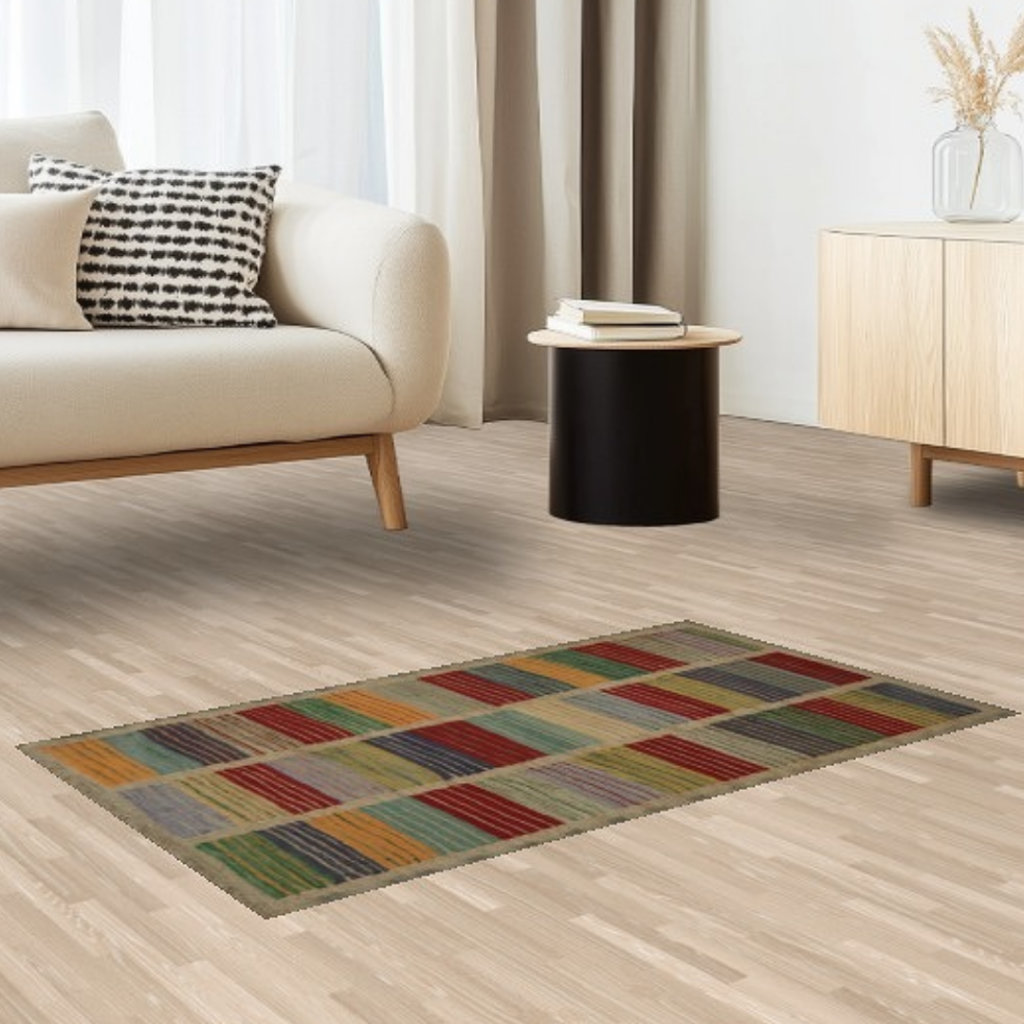
- Minimalist rooms love neutral or two-tone kilims with clean geometry.
- Eclectic spaces thrive with vintage or tribal palettes layered with textiles and wood.
- Mid-century and contemporary settings balance sleek furniture with kilim texture.
Care & Maintenance: Keep It Looking Sharp
- Vacuum, suction only: Avoid beater bars; they can stress flat weaves.
- Shake it out: A quick outdoor shake dislodges dust that settles between wefts.
- Spot clean promptly: Blot (don’t rub) with a clean cloth; test any solution first.
- Rotate every 6–12 months: Even wear and sun exposure.
- Rug pad: Prevents slipping, cushions fibers, and extends life.
- Professional cleaning: For periodic deep cleaning, choose a specialist in handwoven flat-weaves.
For broader textile care principles, museum and conservation resources (like The Met and V&A above) offer excellent, time-tested guidance for natural fibers.
Ready to Choose Your Kilim?
Kilim rugs deliver authentic craftsmanship, high-impact design, and real-life practicality, a rare trifecta in home décor. Whether you’re hunting for a vintage Anatolian statement, a refined Persian flat-weave, or an earthy Moroccan piece, you’ll find thoughtfully sourced options at Rug Source.
- Explore the full collection: Kilim rugs.
- Love the storytelling in nomadic weaves? See our tribal rugs
Visit Rug Source online or stop by our Charlotte showroom to see and feel why kilims remain a timeless choice for design-forward homes.