

How can you tell if a Persian rug is real?
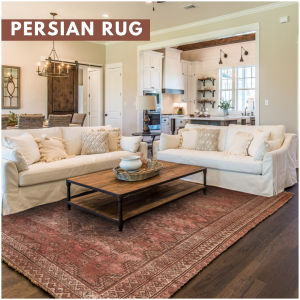
Persian rugs are known for their exceptional quality and craftsmanship, and they have been highly sought after for centuries. However, with the rise of imitation rugs flooding the market, it can be difficult to tell whether a Persian rug is authentic or not. In this blog post, we will explore the key characteristics that can help you identify a real Persian rug.
- The Knots
One of the easiest ways to determine if a Persian rug is genuine is to look at the knots. Persian rugs are hand-knotted, which means that each knot is made by hand. If you look at the back of the rug, you will be able to see the knots. If they are irregular and uneven, this is a good sign that the rug is genuine. Machine-made rugs, on the other hand, have perfectly uniform knots.
- The Material
The material of a Persian rug is also a good indicator of its authenticity. Genuine Persian rugs are made from wool, silk, or a combination of both. The wool should be soft and lustrous, and the silk should be smooth and shiny. If the rug is made from synthetic materials, it is not a genuine Persian rug.
- The Design
The design of a Persian rug is another key characteristic that can help you determine its authenticity. Traditional Persian rugs feature intricate designs and patterns that are woven into the rug. The designs are often inspired by nature, with floral motifs being very common. If the design is too simple or too modern, it may be an imitation rug.
- The Colors
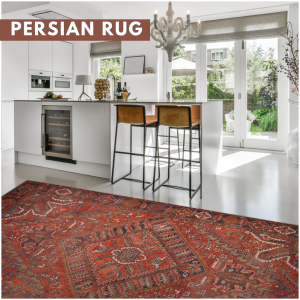
The colors of a Persian rug are also a good indicator of its authenticity. Traditional Persian rugs use natural dyes that are derived from plants and insects. These dyes produce rich and vibrant colors that are not found in synthetic dyes. If the colors of the rug look too bright or too uniform, it may be an imitation rug.
- The Fringe
The fringe of a Persian rug can also help you determine its authenticity. Genuine Persian rugs have fringes that are an extension of the warp threads, which run through the entire length of the rug. The fringe should be knotted and finished by hand. If the fringe is sewn on or glued on, it is not a genuine Persian rug.
- The Price
Finally, the price of a Persian rug can also be an indicator of its authenticity. Genuine Persian rugs are handmade and require a great deal of time and skill to produce. As a result, they are usually more expensive than imitation rugs. If the price seems too good to be true, it probably is.
In conclusion, identifying a genuine Persian rug requires careful observation and attention to detail. By examining the knots, material, design, colors, fringe, and price, you can determine whether a Persian rug is authentic or not. If you are unsure about the authenticity of a rug, it is always best to seek the advice of an expert before making a purchase.