The Ultimate Area Rug Buying Guide: Sizes, Styles, and Placement for Every Room

Choosing the right area rug can feel like one of the most overwhelming decisions in home design. With thousands of styles, sizes, materials, and price points available, it’s easy to feel paralyzed before you even begin. Buy one that’s too small, and your room feels disconnected. Choose the wrong material, and it may not hold up to your lifestyle. Pick the wrong style and your whole space can feel off.
At Rug Source, we’ve been helping homeowners, interior designers, and decorators find the perfect area rug since 2002. With one of the largest selections of authentic, hand-knotted, and hand-tufted rugs available anywhere, we’ve seen every room challenge imaginable, and we know exactly how to solve them.
In this guide, you’ll learn everything you need to confidently choose an area rug: the right size for every room, which styles and materials work best for your needs, how to place your rug for maximum visual impact, and how to keep it looking beautiful for years to come.
Why Area Rugs Are One of the Most Important Elements in Any Room
Think of an area rug as the foundation of your room’s design. It’s one of the few elements that simultaneously affects color, texture, acoustics, comfort, and spatial definition all at once. A well-chosen rug can tie together furniture that wouldn’t otherwise work, define a seating area in an open-concept space, add warmth to cold, hard floors, and reduce noise in high-traffic rooms.
Beyond aesthetics, area rugs are practical. They protect hardwood and tile floors from scratches and wear. They cushion your steps and provide insulation. In rooms with children or pets, they create a softer, safer surface.
The key is knowing how to choose one that works for your specific room, lifestyle, and taste. That starts with understanding size.
Area Rug Size Guide: Finding the Right Fit for Every Room
Sizing is the single most common mistake people make when buying area rugs. Most rooms need a larger rug than people initially think. A rug that’s too small makes furniture look like it’s floating and can actually make a room feel smaller, not larger.
Here are the standard size recommendations by room:
Living Room
- 8×10 rugs: Ideal for medium living rooms. All front legs of sofas and chairs should sit on the rug.
- 9×12 rugs: The most popular size for larger living rooms. All four legs of major furniture pieces can sit fully on the rug.
- Leave 12–18 inches of bare floor visible around the edges of the rug for a balanced, intentional look.
Dining Room
- The rug should extend at least 24–30 inches beyond the table on all sides so chairs remain on the rug when pulled out.
- For a standard 6-person dining table, an 8×10 or 9×12 is typically the right fit.
Bedroom
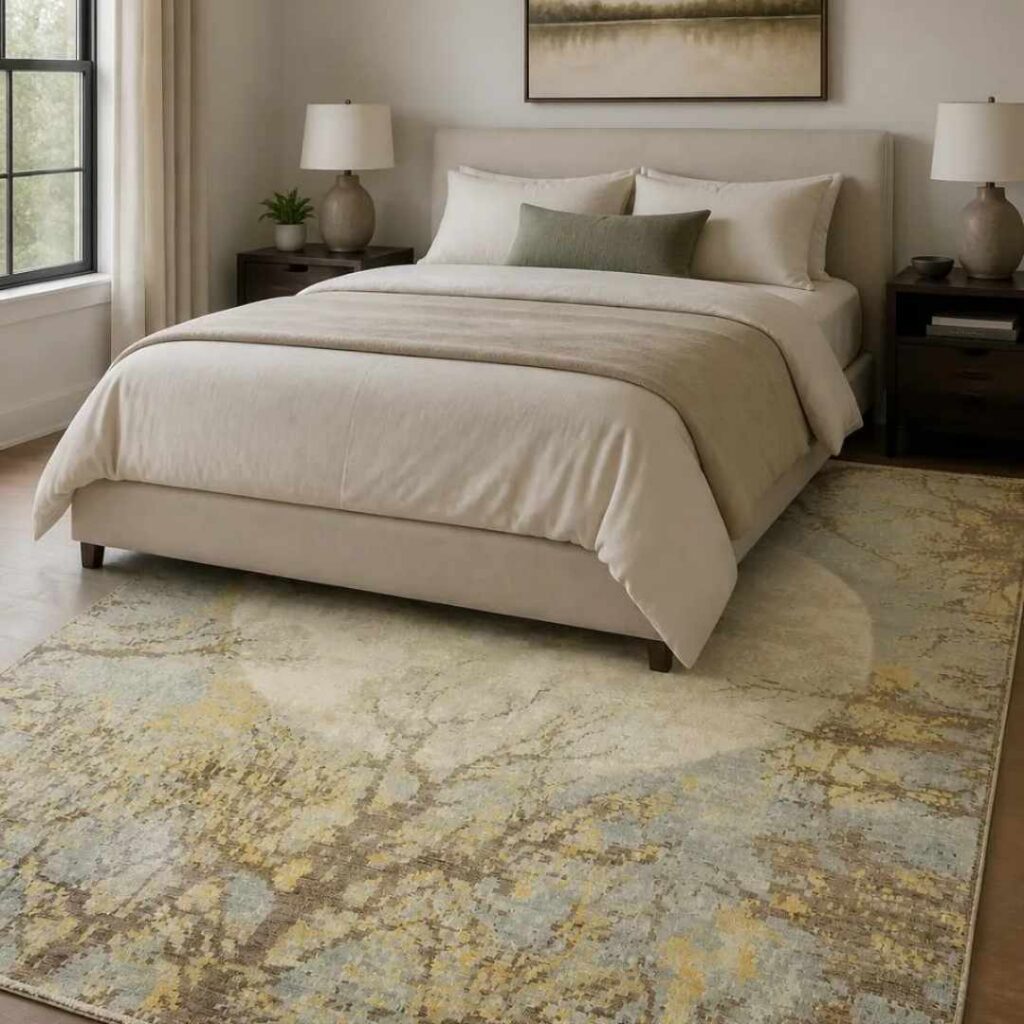
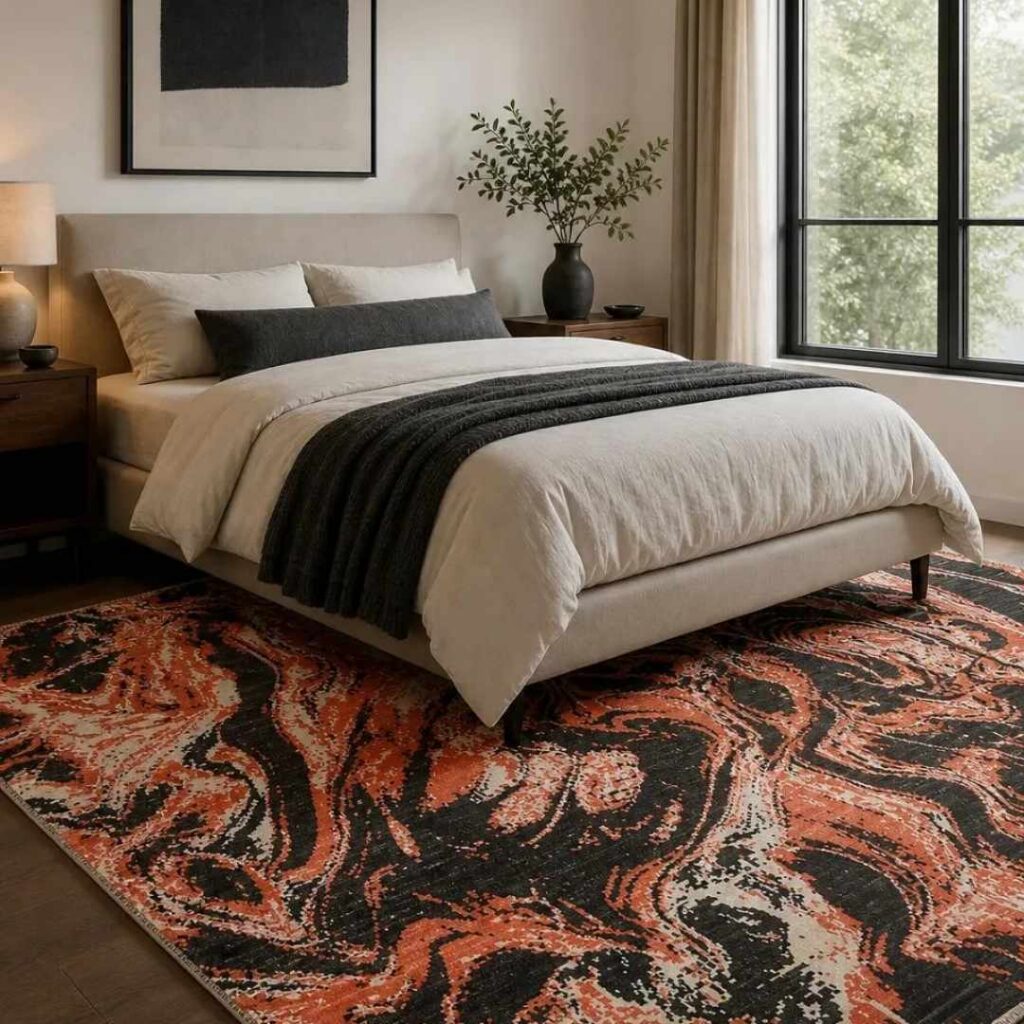
- Place an 8×10 or 9×12 under the bed with 18–24 inches extending on each side and the foot of the bed.
- Alternatively, use a 5×7 or 5×8 at the foot of the bed for a smaller accent.
Entryway & Hallway
- Runners work best in hallways: 2×8, 2.5×8, or 2.5×10 are standard sizes.
- For a foyer, a 4×6 or 5×7 defines the entry without overwhelming the space.
Area Rug Styles: From Traditional to Modern and Everything In Between
Area rugs come in a wide range of styles, and the right one depends on your room’s existing design language as well as your personal taste. Here’s a breakdown of the most popular styles available at Rug Source:
Traditional & Oriental Rugs
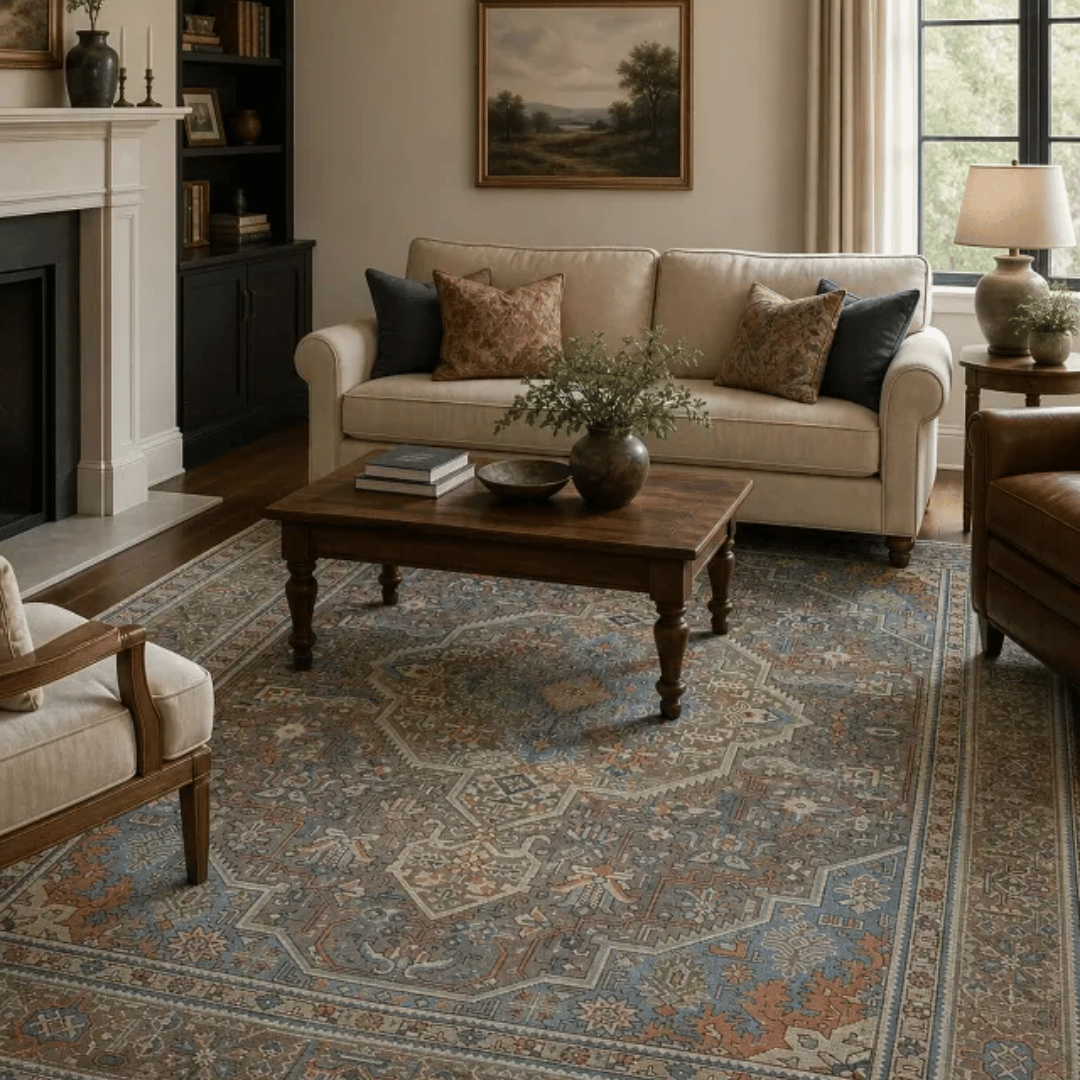
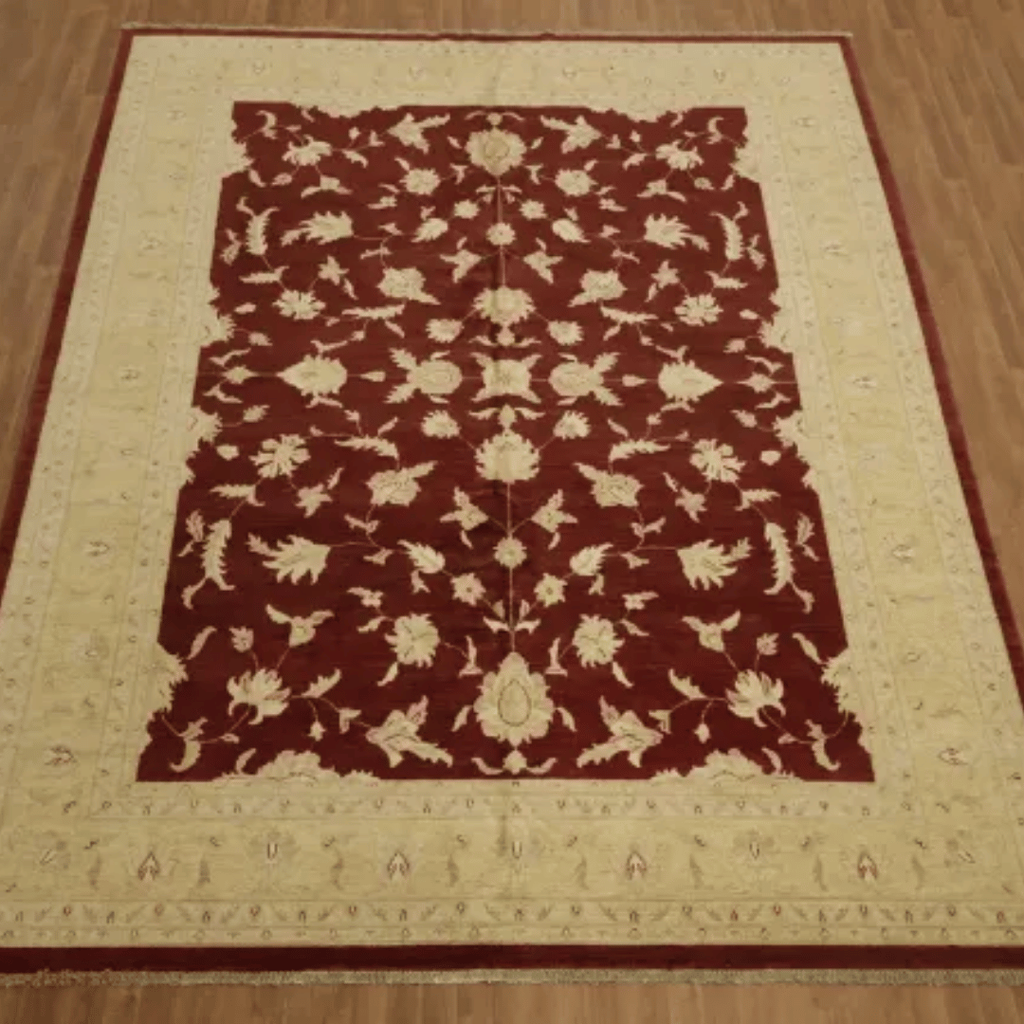
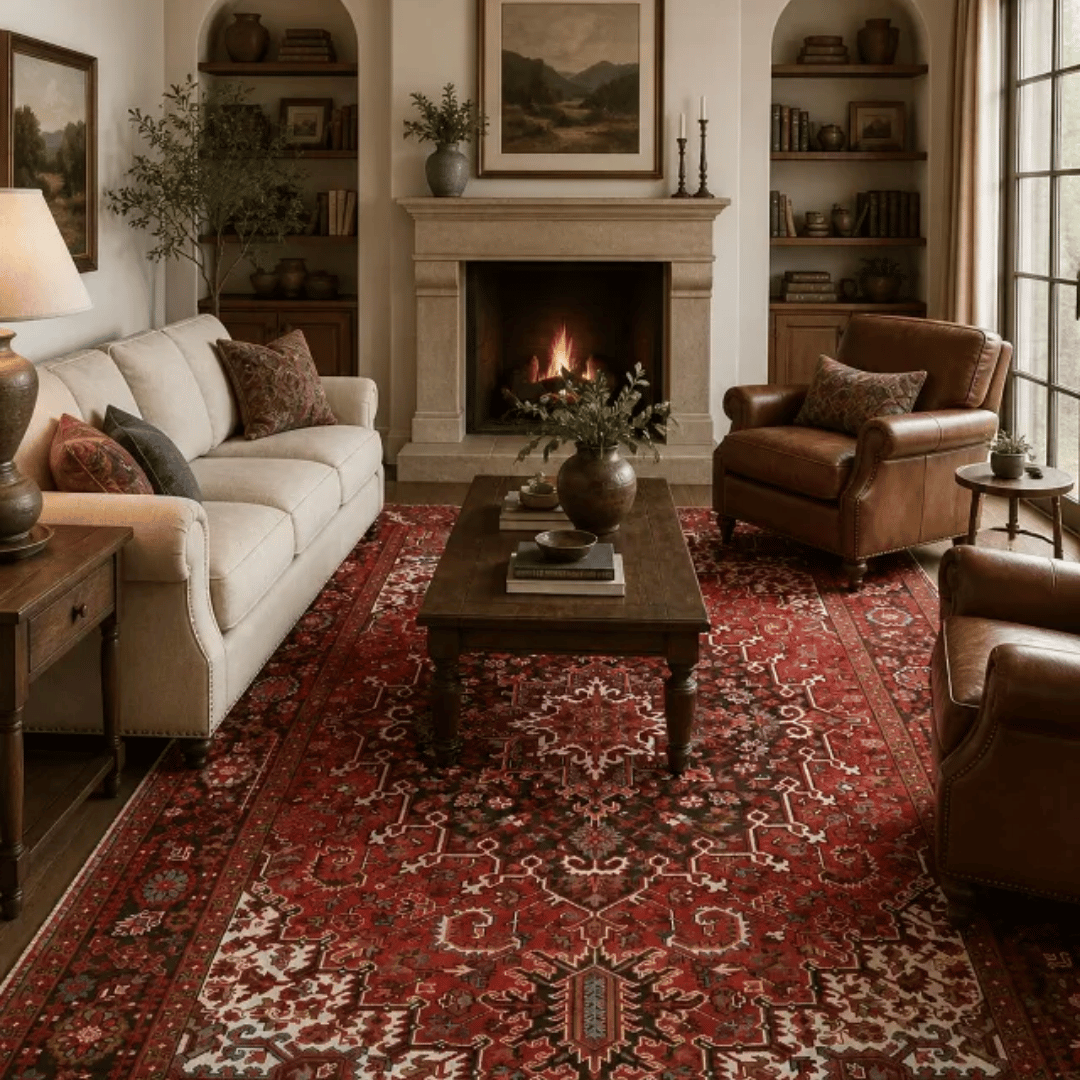
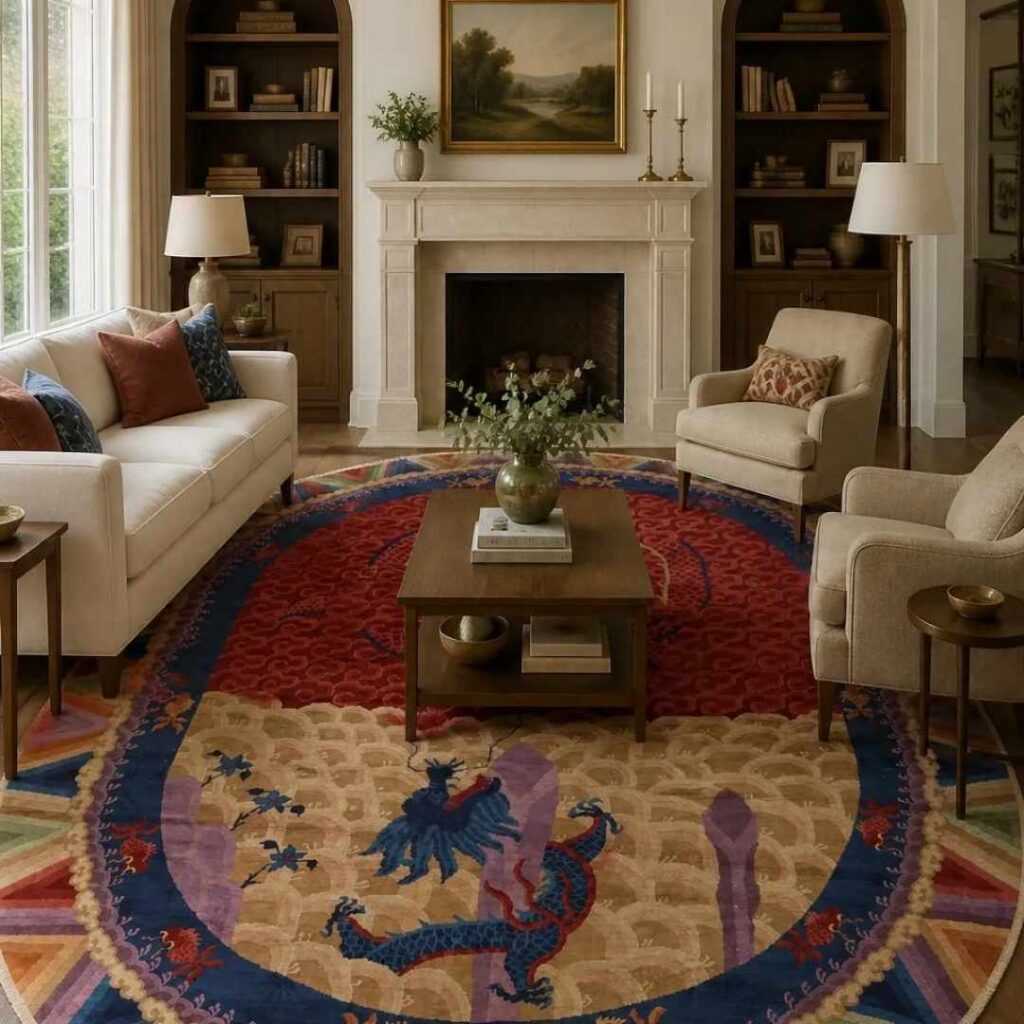
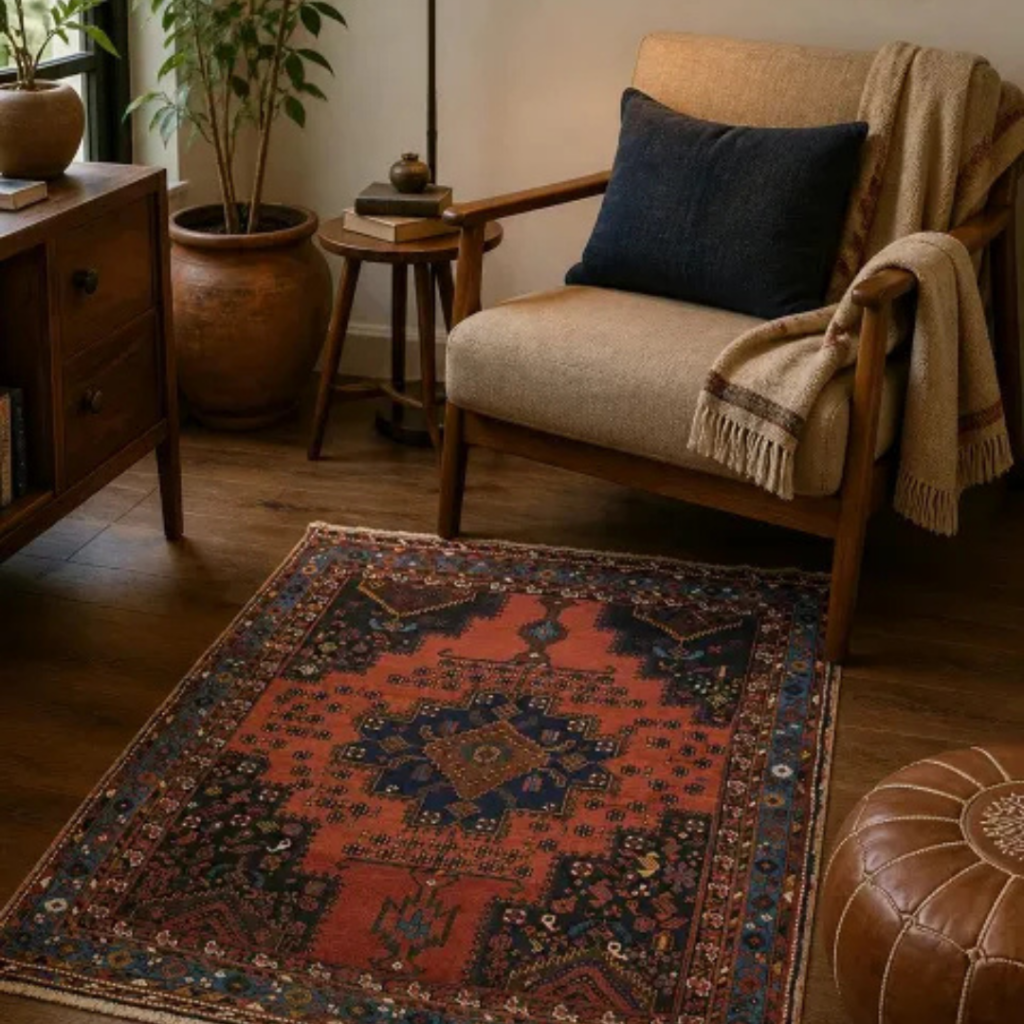
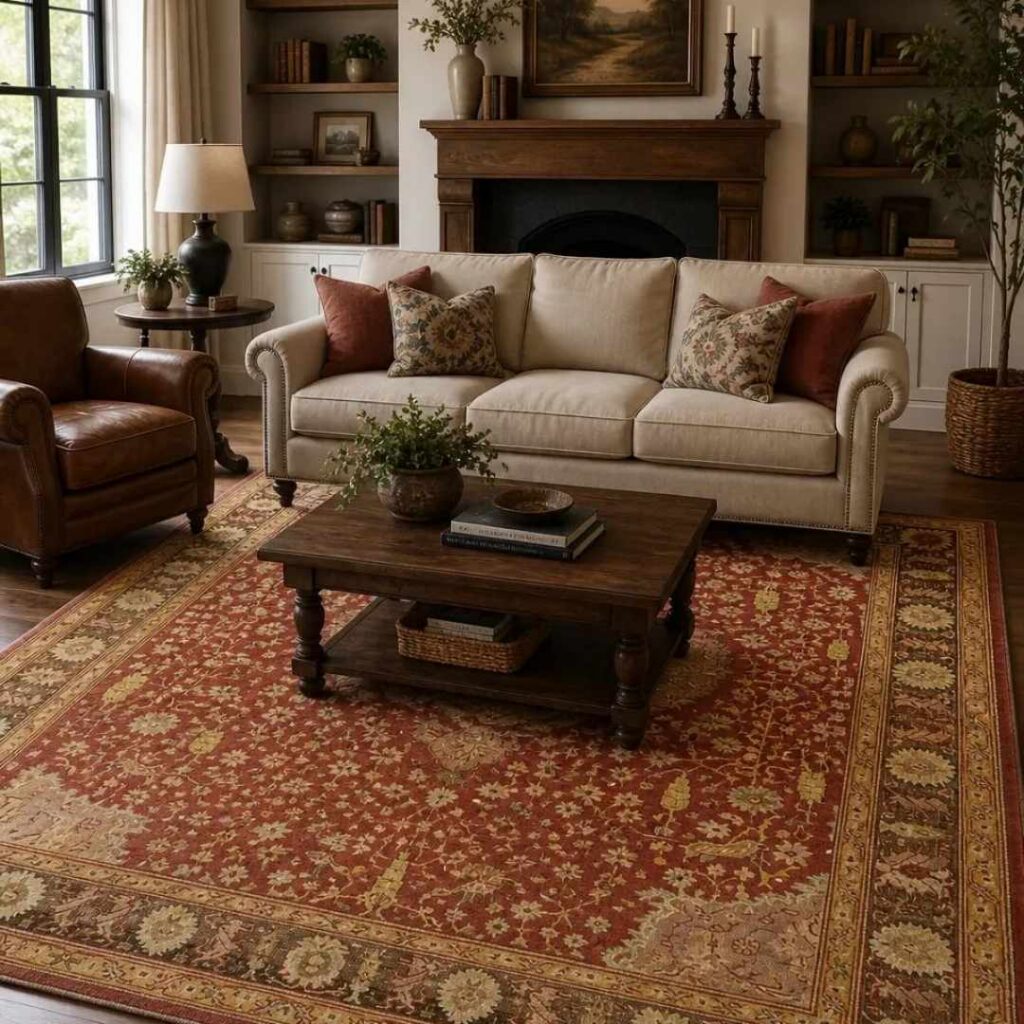
Persian, Oriental, and traditional rugs feature intricate medallion patterns, floral motifs, and rich jewel tones like navy, burgundy, and ivory. These rugs are timeless and work beautifully in formal living rooms, studies, and dining rooms. Hand-knotted versions can last generations with proper care.
Modern & Contemporary Rugs
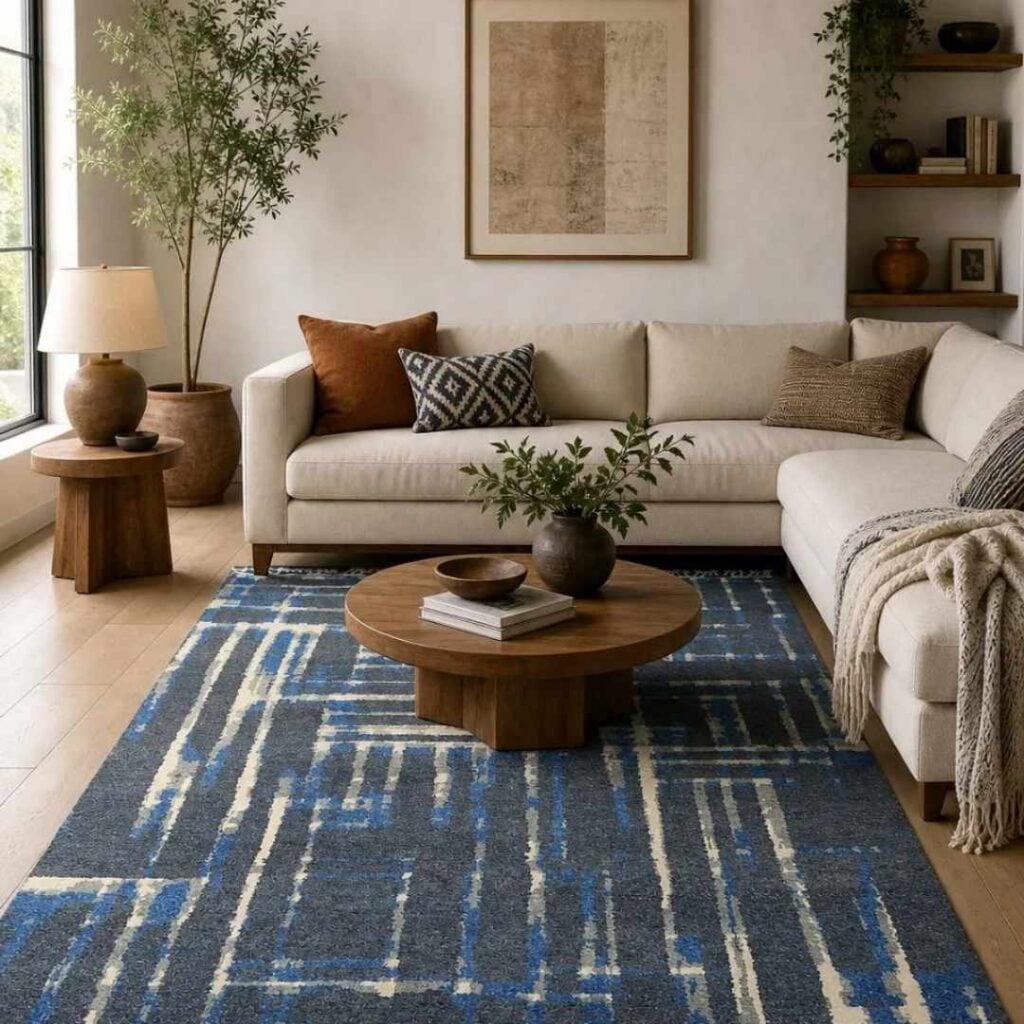
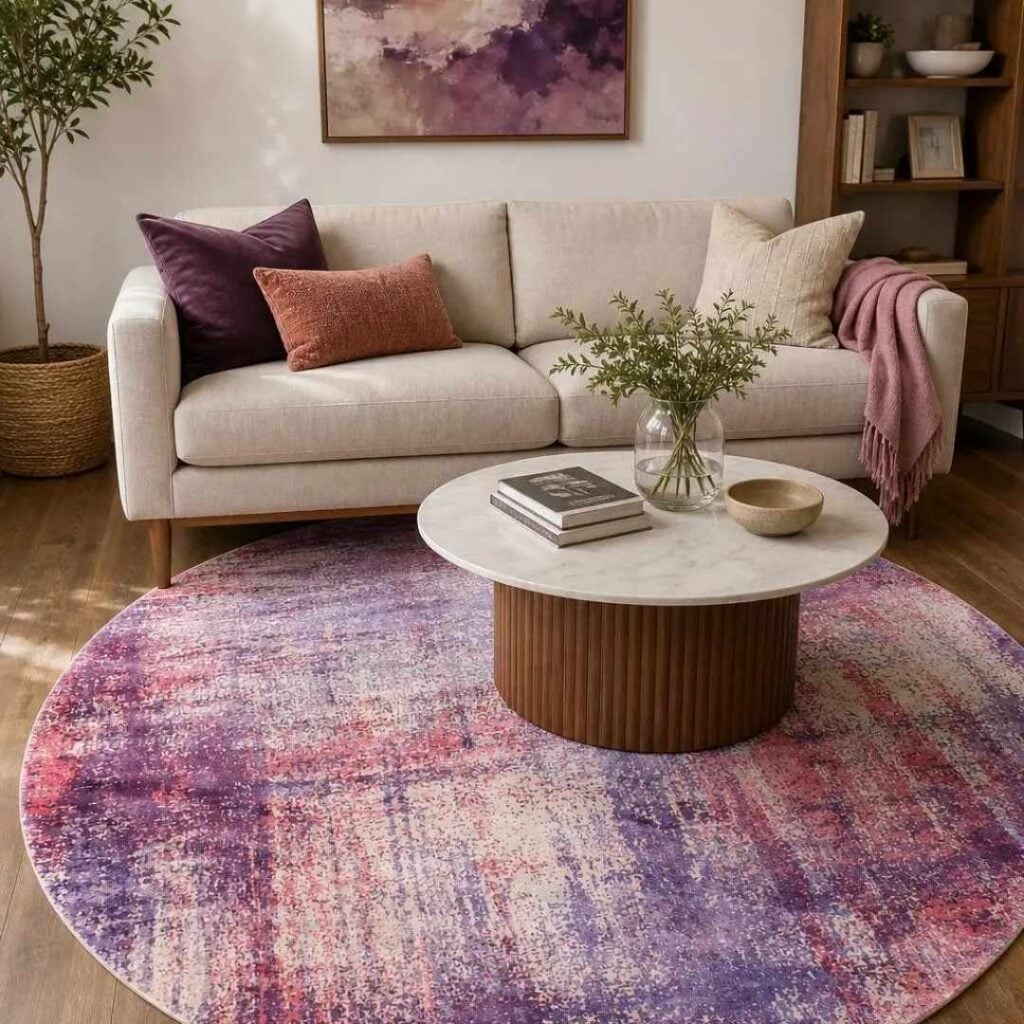
Clean lines, abstract patterns, and neutral or bold colorways define modern and contemporary area rugs. These work well in minimalist, Scandinavian, or transitional interiors. Geometric patterns are especially popular in open-concept living spaces.
Vintage & Distressed Rugs
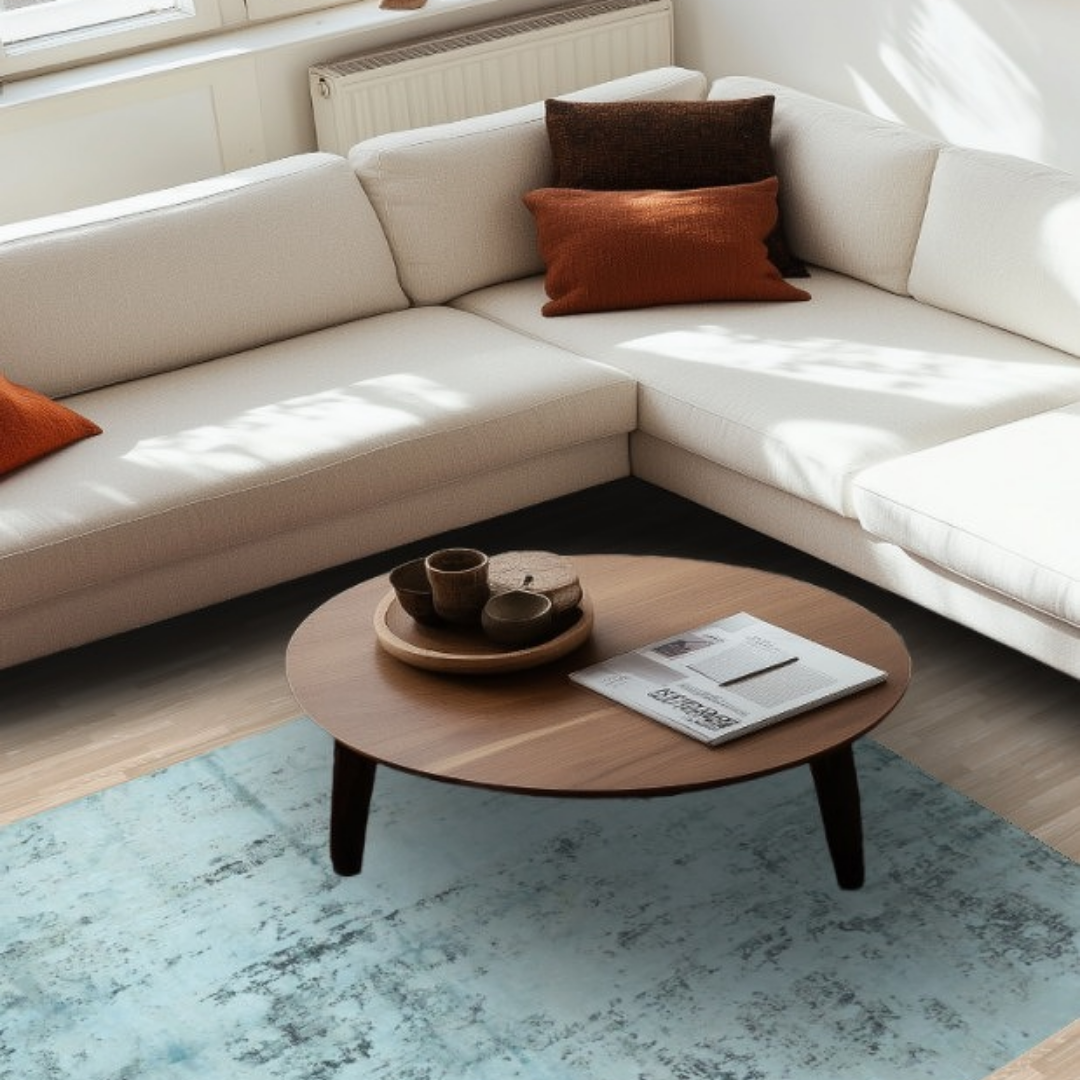
Distressed and vintage-style rugs offer the look of a well-worn antique at a more accessible price point. Muted colors and faded patterns give these rugs a relaxed, layered look that complements bohemian, farmhouse, and eclectic interiors.
Tribal & Kilim Rugs
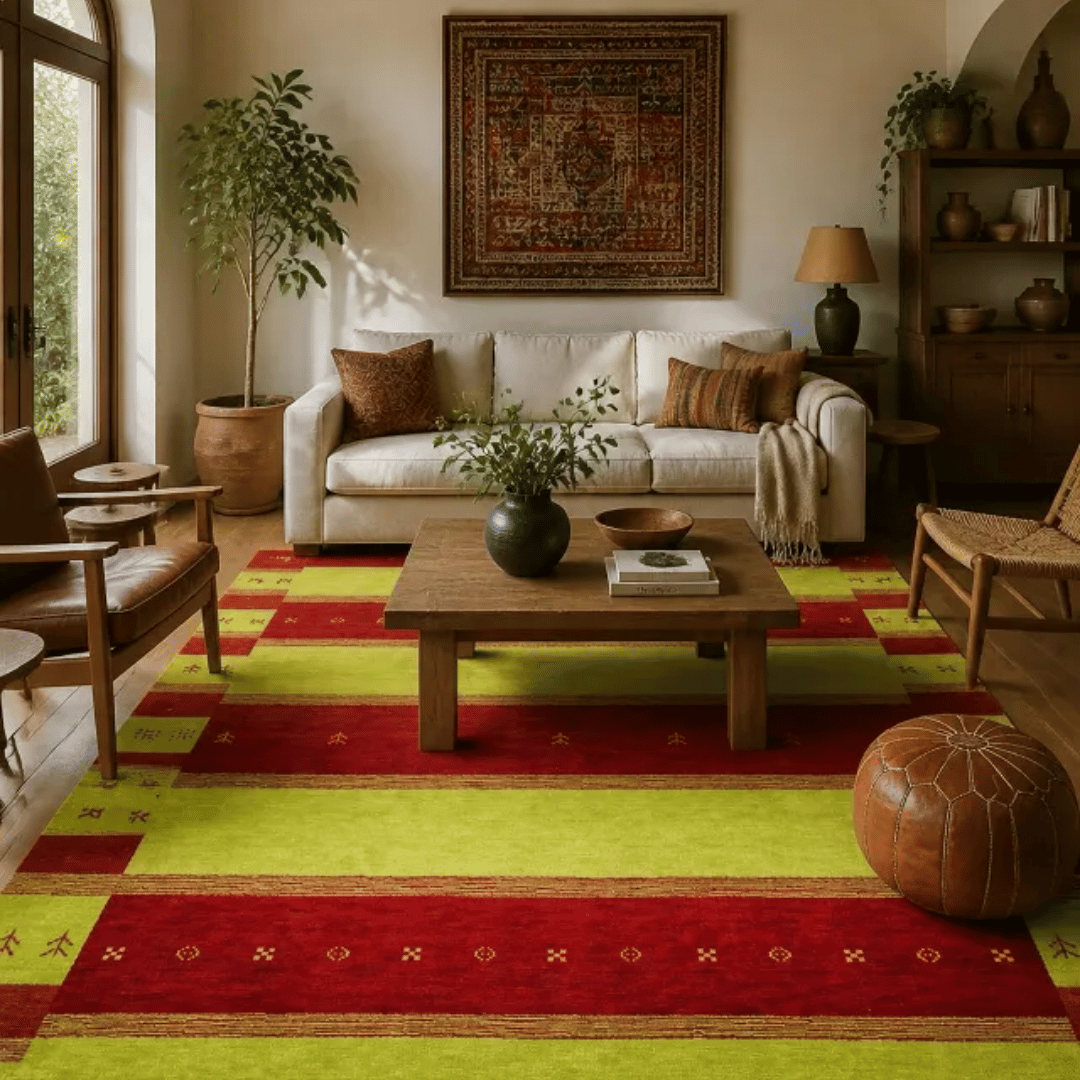
Kilim and tribal rugs are flat-woven with bold geometric or tribal motifs. They’re lightweight, reversible, and incredibly durable, making them a great choice for high-traffic areas. They add character and texture to casual, global, or eclectic spaces.
Area Rug Materials: What to Choose for Your Lifestyle

The material of your area rug determines its feel underfoot, its durability, how easy it is to clean, and how long it will last. Here’s how the most common materials compare:
- Wool: The gold standard in rug materials. Naturally stain-resistant, soft, durable, and long-lasting. Wool rugs are ideal for living rooms and bedrooms where comfort and longevity are priorities. Hand-knotted wool rugs can last 50–100 years.
- Silk: Lustrous and incredibly fine, silk rugs showcase intricate detail and sheen. Best for low-traffic areas like formal rooms or as wall decor. Often blended with wool for added durability.
- Cotton: Affordable, lightweight, and washable, making cotton rugs a practical choice for kitchens, bathrooms, and kids’ rooms. Less durable than wool for high-traffic areas.
- Synthetic (Polypropylene, Nylon): Highly stain-resistant and budget-friendly. Great for outdoor spaces, high-traffic areas, and homes with pets or young children. It won’t replicate the feel or longevity of natural fibers.
Styling & Placement: How to Make Your Area Rug Work in Any Space
Even the most beautiful rug can fall flat if it’s placed incorrectly. These are the placement rules we recommend at Rug Source, and they apply consistently across every room:
- Living room: At minimum, the front two legs of your sofa and chairs should rest on the rug. Ideally, all four legs of every piece of furniture sit on the rug. This creates a cohesive, intentional look.
- Dining room: Extend at least 24–30 inches beyond the table’s edge on all sides. Chairs should stay on the rug even when pulled out fully.
- Bedroom: Place two-thirds of the rug under the bed, with 18–24 inches extending on the sides and foot. You want to step onto the rug when getting out of bed.
- Open-concept spaces: Use area rugs to visually define zones. A large rug anchors the seating area; another can define the dining space. Leave a clear gap between zones.
Always use a quality rug pad underneath your area rug. A rug pad prevents slipping, adds cushion underfoot, protects your floors, and extends the life of the rug itself.
Area Rug Care & Maintenance: Keeping Your Rug Beautiful for Years
A quality area rug is an investment, and with proper care, it will reward you with decades of beauty and function. Follow these guidelines to protect yours:
- Vacuum regularly: Vacuum your rug 1–2 times per week in high-traffic areas. For hand-knotted or delicate rugs, use a suction-only setting without a beater bar to protect the fibers.
- Rotate every 6–12 months: Rotating your rug ensures even wear and prevents one area from fading more than others, especially important in rooms with direct sunlight.
- Blot spills immediately: Blot, don’t rub. Use a clean white cloth to absorb liquid. Rubbing spreads the stain and can damage fibers. For stubborn stains, consult a professional rug cleaner.
- Professional cleaning: Have your area rug professionally cleaned every 1–3 years, depending on foot traffic and household conditions.
- Use a rug pad: A rug pad reduces friction, prevents slipping, and keeps the rug from wearing down against hard floors.
Find Your Perfect Area Rug at Rug Source
The right area rug doesn’t just finish a room; it defines it. It brings warmth, personality, and purpose to any space, from a sprawling open-concept living room to a cozy bedroom retreat. Whether you’re drawn to the timeless beauty of a hand-knotted Persian, the bold geometry of a modern design, or the relaxed character of a distressed vintage piece, the perfect rug is out there for you.
At Rug Source, we’ve been curating an exceptional selection of authentic area rugs since 2002. From hand-knotted masterpieces to hand-tufted everyday favorites, our collection spans thousands of styles, sizes, and price points with free shipping on every order.