

Here’s a fun fact for you! Did you know that Moroccan rugs have been around for thousands of years? It’s true, and if you’re wondering how we know this, the answer is rather interesting. As it turns out, Moroccan Rugs have been found in Phoenician tombs as far back as the 8th century BC. This helps to contribute to the beautiful and mysterious nature of Moroccan Rugs.
After all, anything that can connect to ancient civilizations has a timeless feel. Here is a quick overview of Moroccan Rugs!
Origin Story
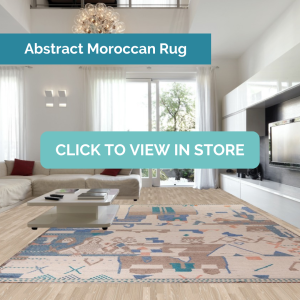
First, we should begin with the origin story of Moroccan Rugs. Ours starts with the Berber people from the Maghreb region of North Africa. Known for sheep herding in the Atlas region, wool was abundant and the most common weaving material. Cotton, silk, and camel hair were historically used as well. Each tribe had its unique designs and dyes.
Here, rugs were woven and created out of necessity. However, as they refined their practices, it led to several interesting weaving types.
Weaving Types
Just as each tribe had its own style in regards to design, they had varying weaving styles as well based upon the area they were in. Some used flat weaving techniques, while others created hand-knotted rugs with a thicker pile. Traditionally, thinner weaves and piles were more suited to tribes living in desert climates, whereas a thick pile wool rug would keep feet warm in the cold and snow of mountain regions.
In both weaving techniques, the artisan will use a loom to create their masterpiece, which takes anywhere from a few months to an entire year, based on the size and complexity of the piece. In addition, techniques are specific to each tribe and are passed down from mother to daughter.
Dye Colors
While some rug families are known for their subtle and soft dye colors, the same cannot typically be said for Moroccan rugs. In contrast, Moroccan rugs are bold, bright, and beautiful. Dyes are procured from native plants, flowers, and spices.
Color is used symbolically as well, with various meanings associated with each. For example, red is for strength, blue is for wisdom, yellow is for eternity, and green is for peace. These aren’t the only colors you’ll see, as indigo, madder, henna, and saffron are a few additional shades weavers use in constructing Moroccan rugs.
Designs that Tell Stories
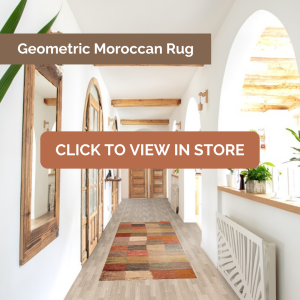
One detail similar to many of the other rug families we’ve talked about is that they often tell a story. The rug weavers utilize designs and shapes such as geometric shapes, patterns, and other symbols that represent their individual beliefs and culture. Some shapes correlate to a specific purpose, whether luck, fertility, peace, or protection.
Durability
The Atlas Mountains and Sahara Desert region can be harsh and unforgiving. Often, those who lived in these regions embraced a Nomadic lifestyle. Moroccan Rugs had to be durable to withstand the cold and snow while holding up in the hot, arid desert climate.
Discover the beauty of Moroccan rugs at Rug Source!
Today, we just wanted to give you a brief overview of the beautiful and mysterious nature of Moroccan Rugs. And, if you’re ready to add one to your home, you’ve come to the right place. Please browse our online inventory here to find the Moroccan Rug of your dreams!