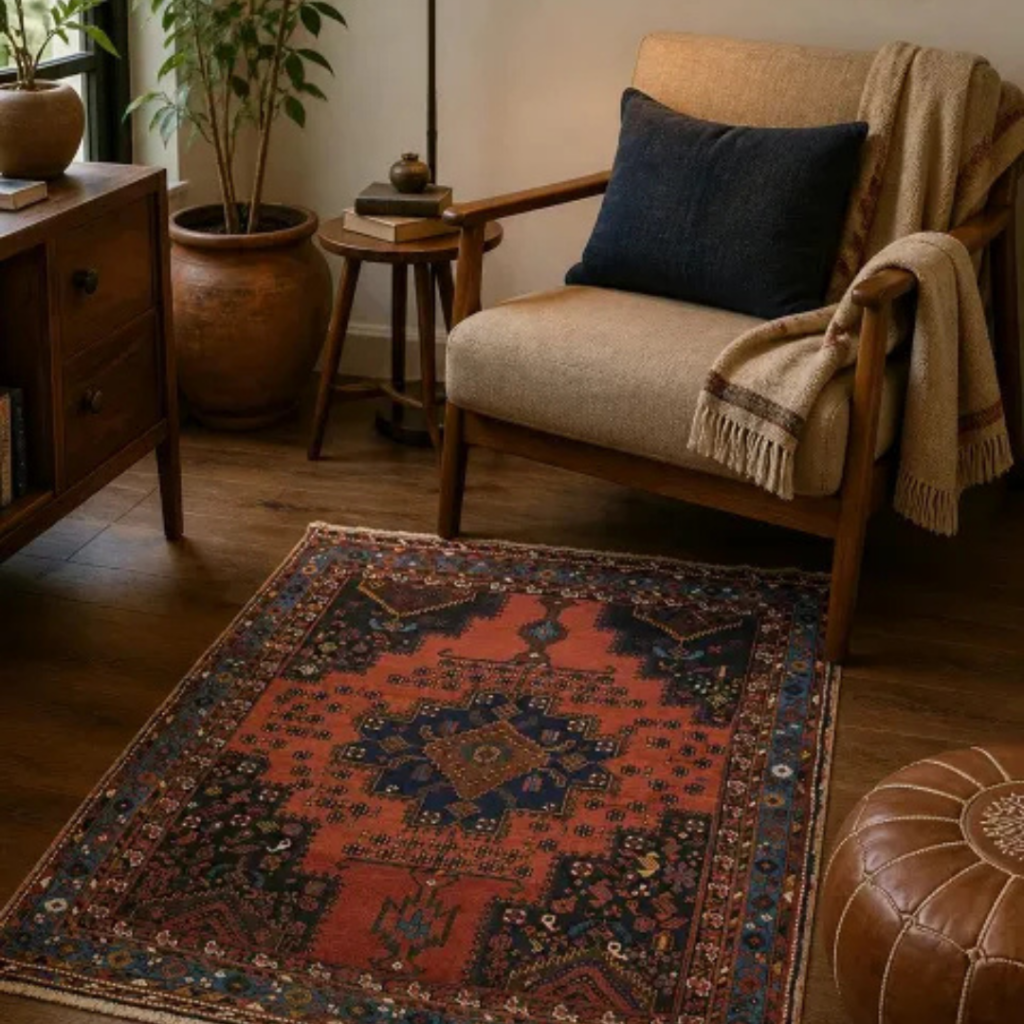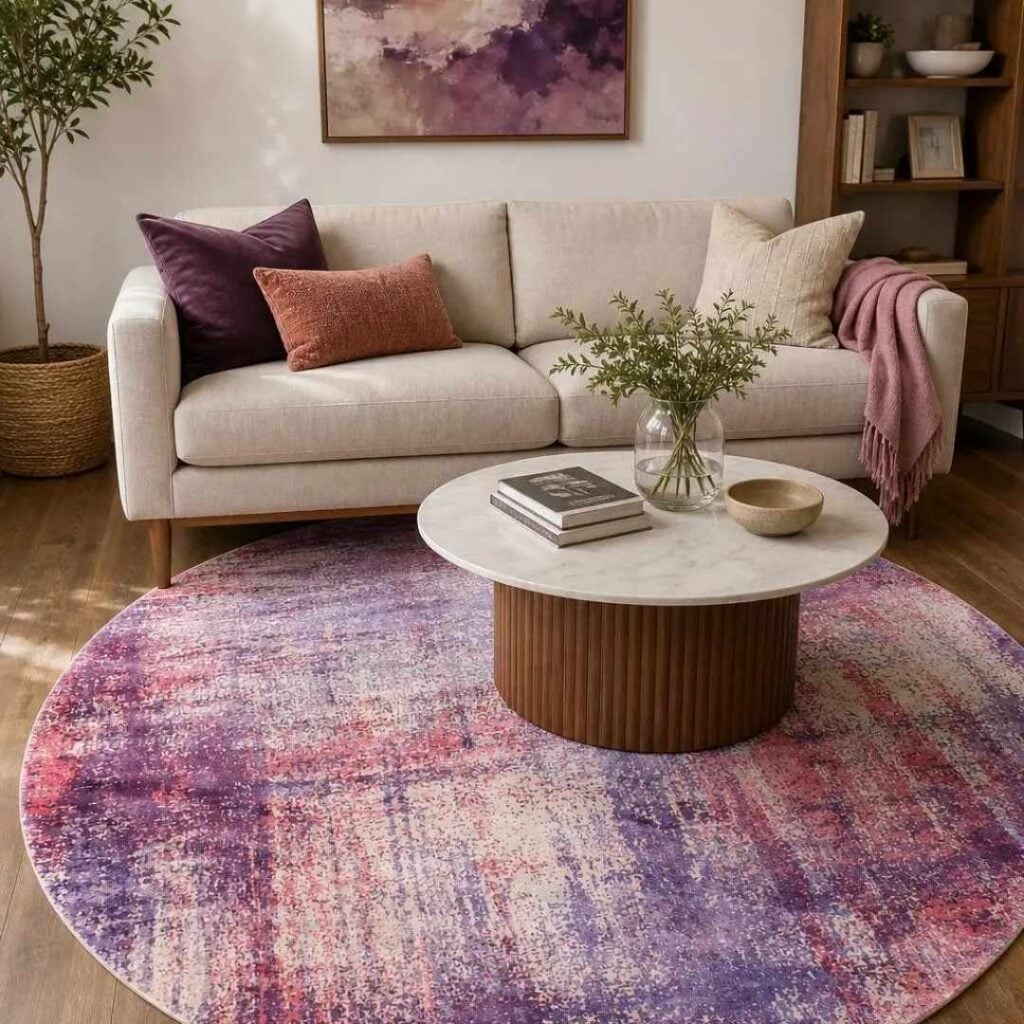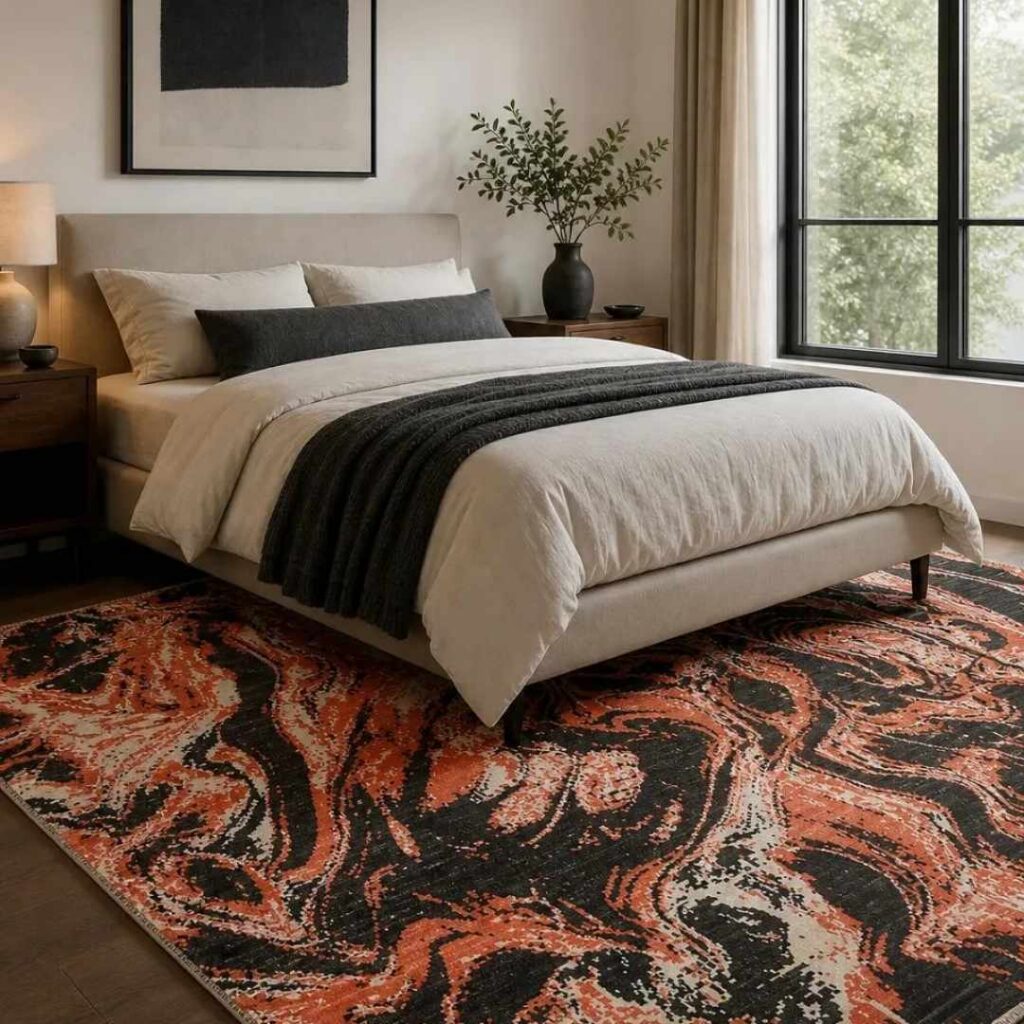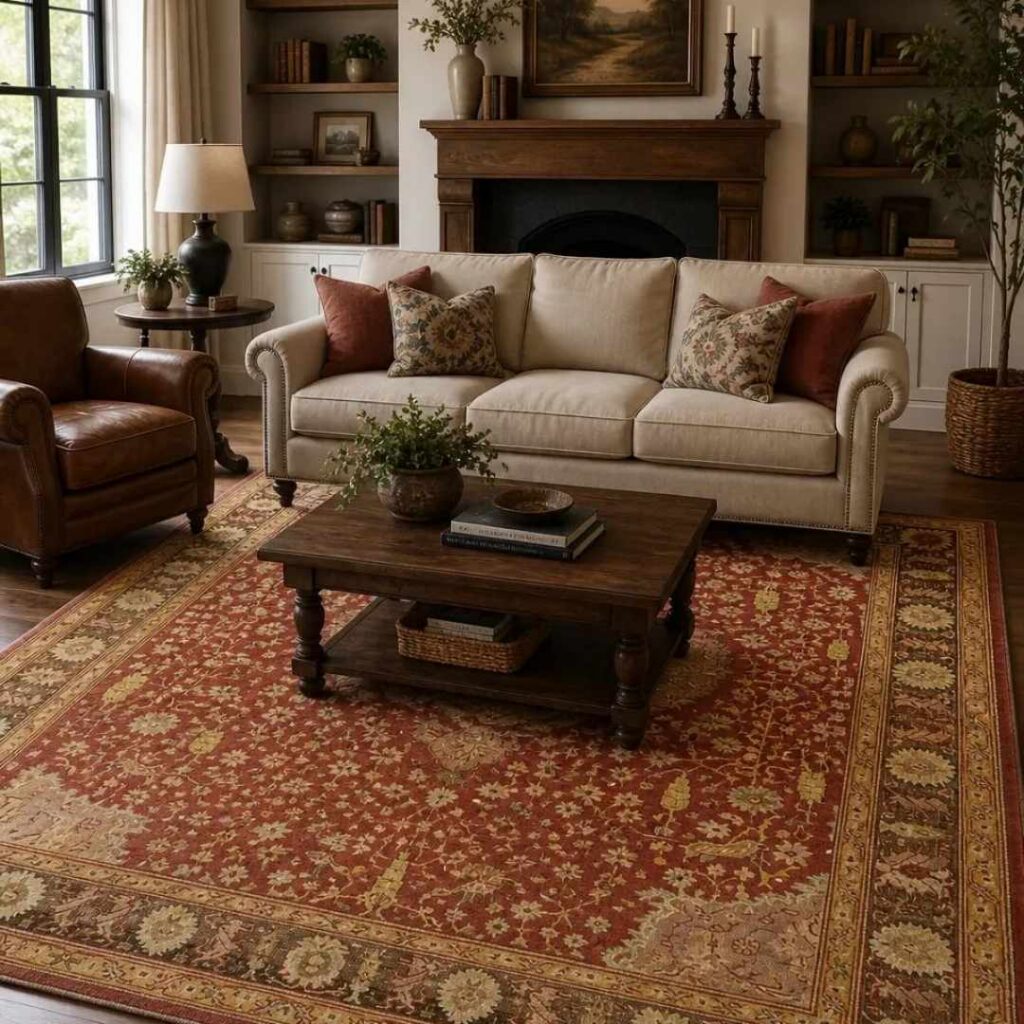
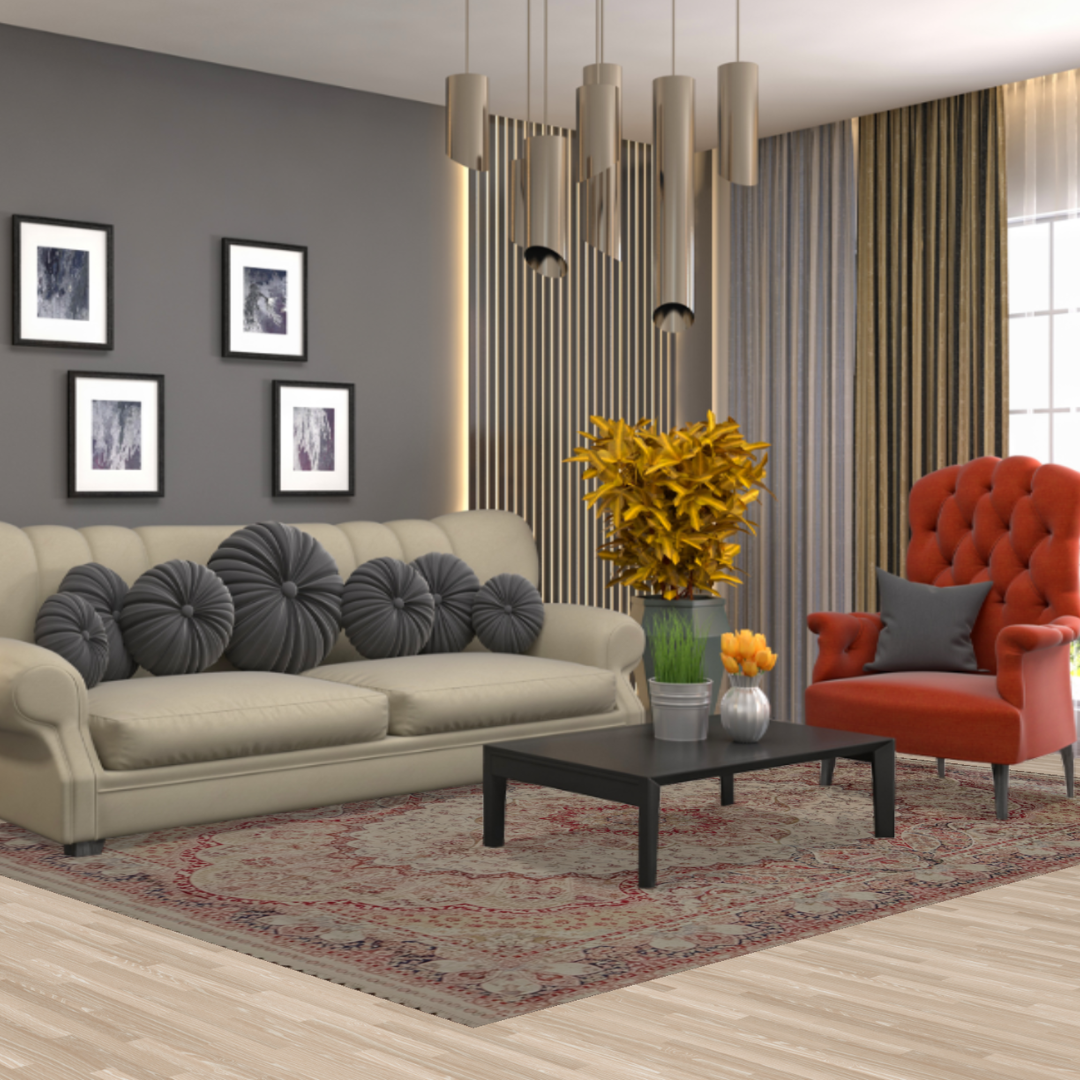

Area rugs do more than cover a floor. They anchor furniture, define zones, and add depth to a room’s design. Yet even the most beautiful rug can look out of place if it isn’t positioned correctly. Designers consistently follow tried-and-true placement rules to achieve balance, proportion, and cohesion.
At Rug Source, we’ve helped countless homeowners find the right rug for their spaces, and we know that size and placement are just as important as style. In this guide, we’ll share the essential area rug placement rules that designers swear by, covering living rooms, bedrooms, dining rooms, hallways, and open-concept layouts.
General Rules for Area Rug Placement
Before diving into specific rooms, there are a few universal guidelines to keep in mind:

- Proportion is key. A rug should be proportional to the furniture grouping, not just the overall room size.
- Leave borders. Designers often recommend leaving 12–18 inches of bare floor around the edges of a rug so the rug feels anchored rather than wall-to-wall.
- Rug pads matter. Pads prevent slipping, add cushioning, and extend the rug’s life by reducing friction with the floor.
- Avoid undersized rugs. One of the most common mistakes homeowners make is choosing a rug that’s too small, creating what designers call the “postage stamp” effect.
According to Elle Decor, rugs should always feel like they belong to the furniture layout. A rug that floats in the middle of the floor, disconnected from furnishings, will make the entire room feel off-balance.
Living Room Rug Placement
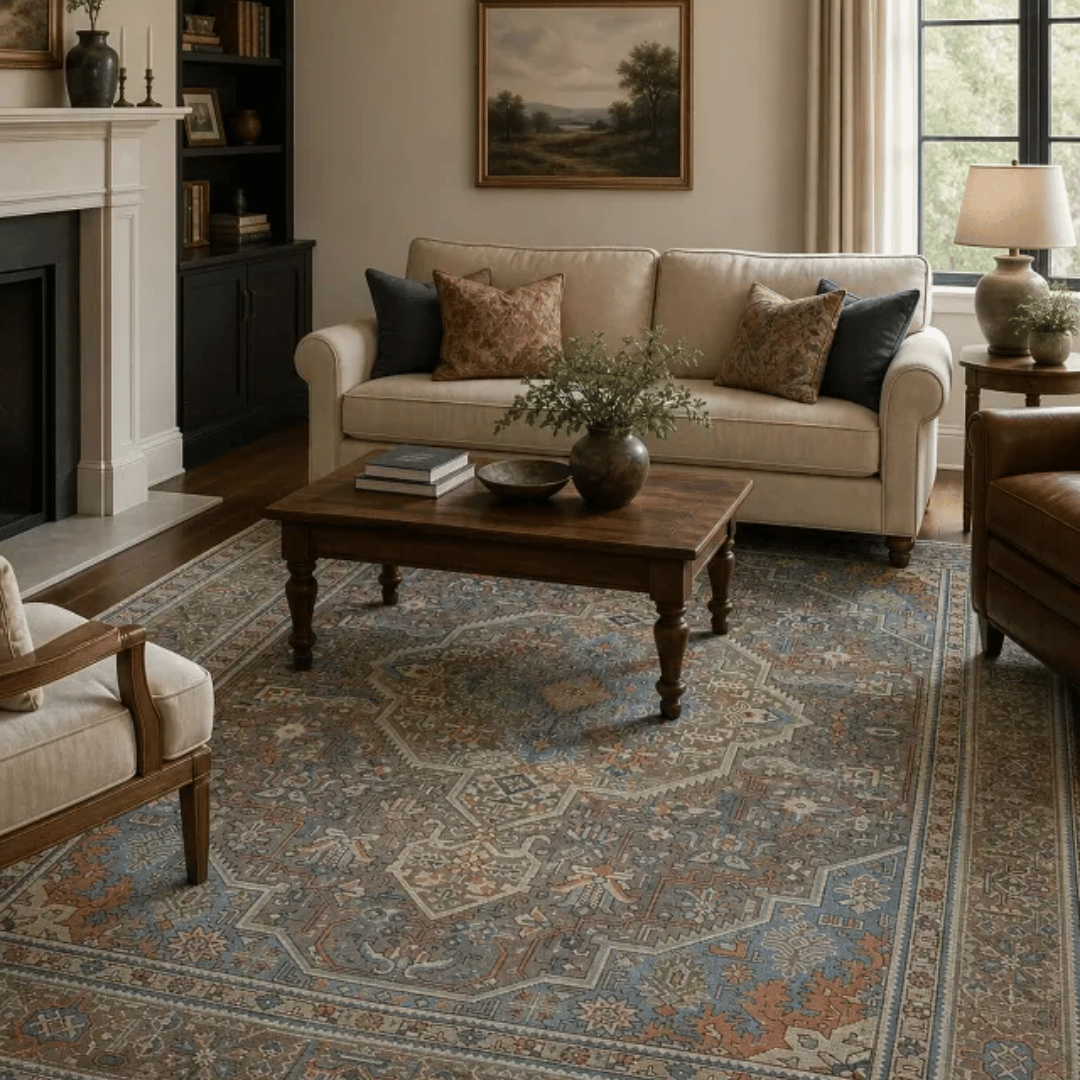
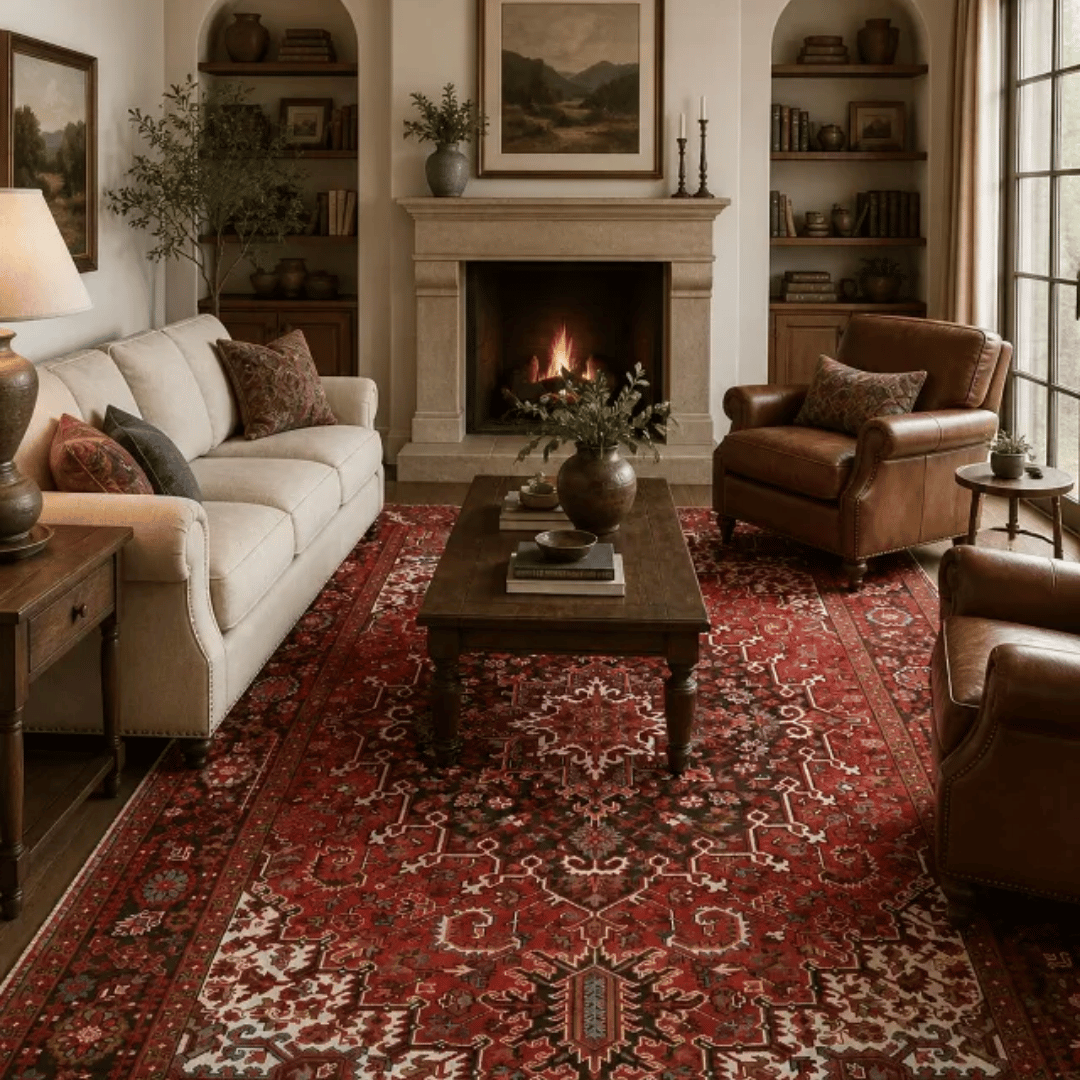
The living room is where rug placement has the most impact. Since it’s often the largest seating area in a home, the rug helps anchor the conversation zone and unify multiple pieces of furniture.
Design-approved options include:
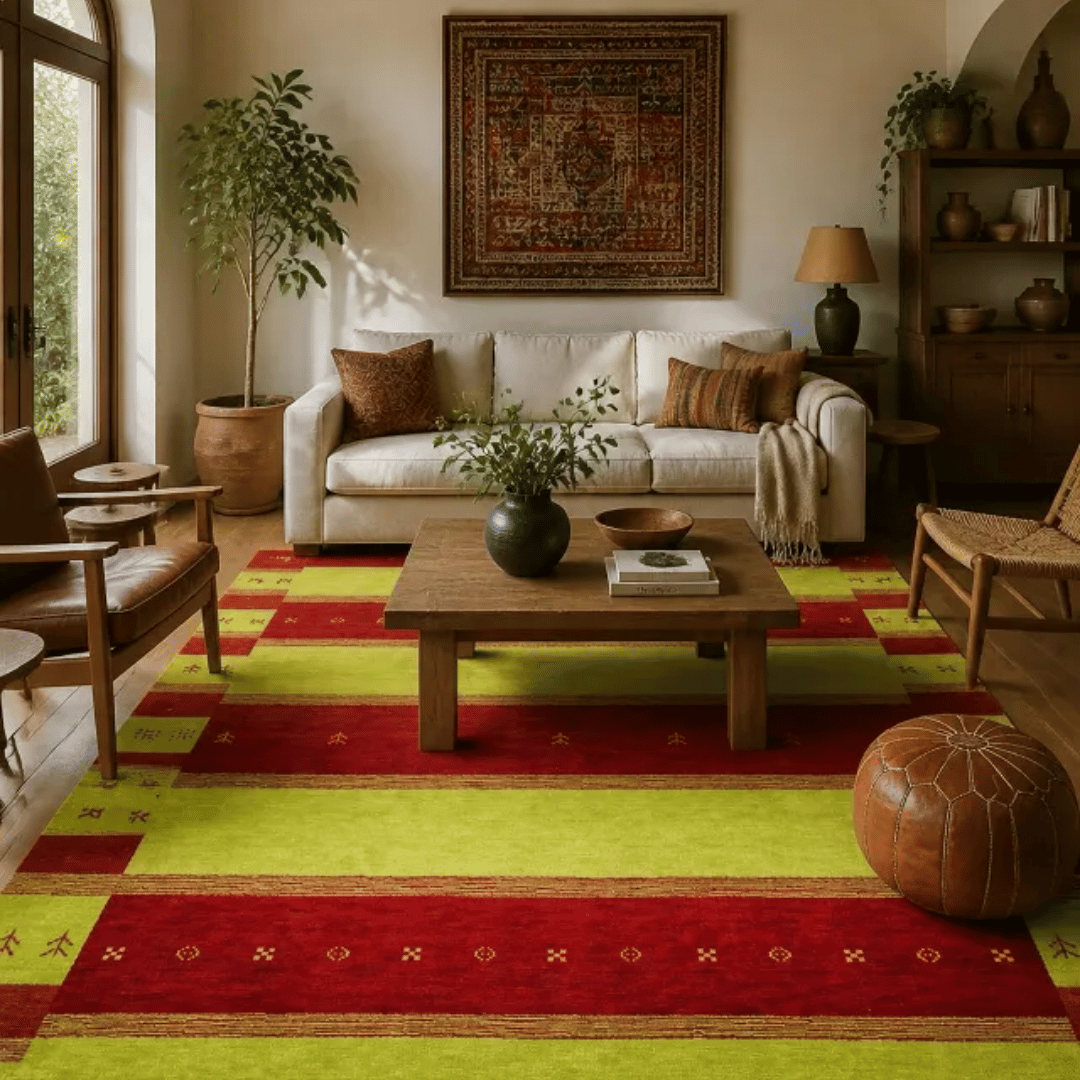
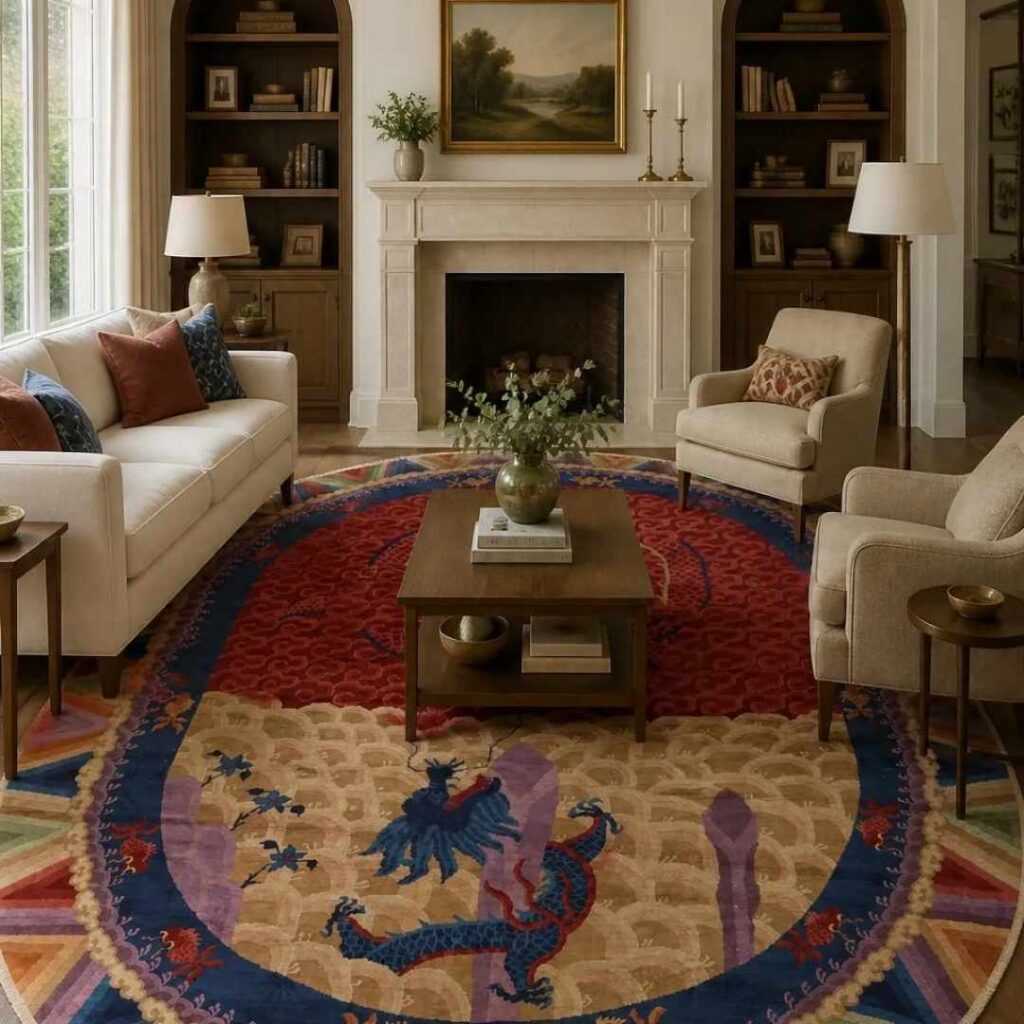
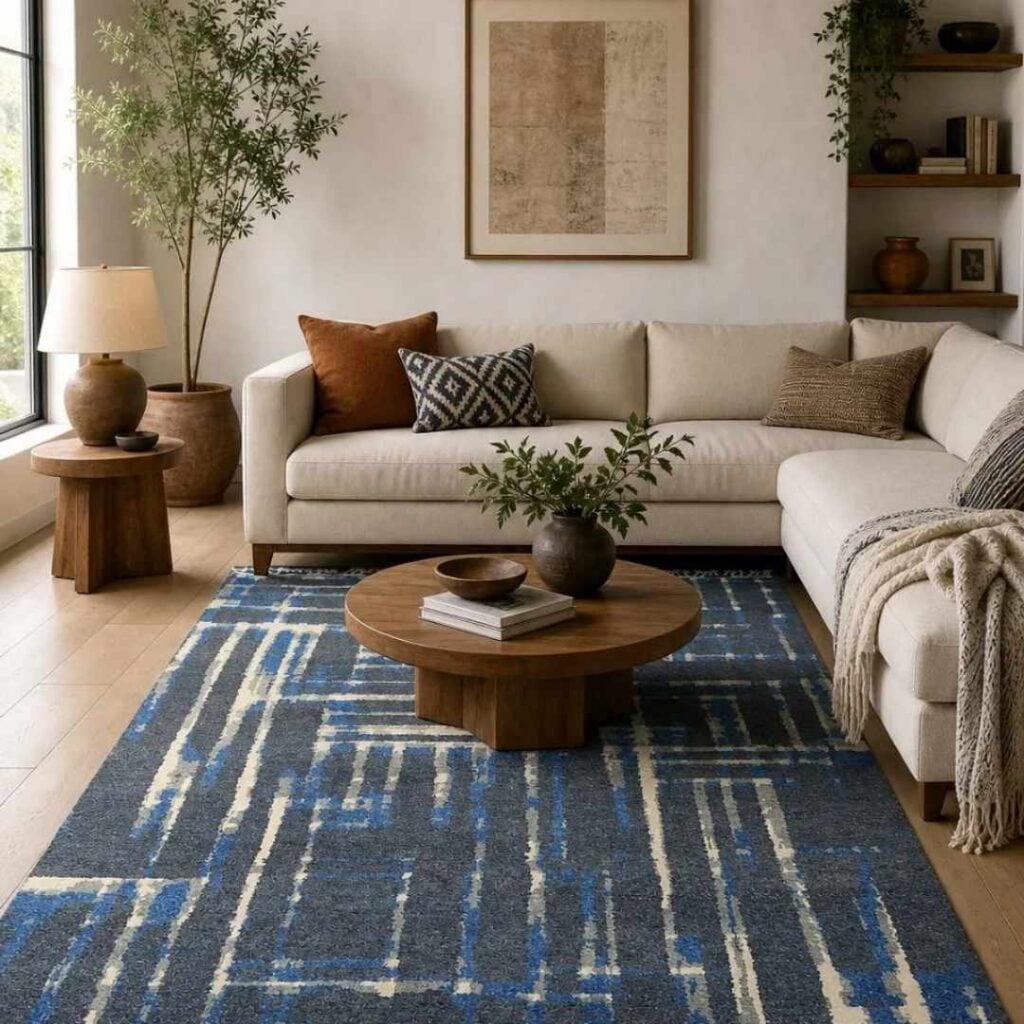
- All legs on: Best for large living rooms. The rug extends under all furniture legs, creating a unified, grounded look.
- Front legs on: A popular choice for medium-sized spaces. Sofas and chairs rest with their front legs on the rug, while the back legs sit on the bare floor. This ensures cohesion without requiring an oversized rug.
- Avoid floating rugs: Rugs that don’t touch furniture make the layout feel disconnected.
Size tips: For most living rooms, an 8×10 or 9×12 rug works best, depending on furniture arrangement and room size.
Dining Room Rug Placement
Dining room rugs must balance aesthetics with practicality. The key rule: the rug should be large enough to accommodate both the table and chairs, even when chairs are pulled out.
- Extend 24–30 inches beyond the table edges on all sides. This ensures chairs remain fully on the rug.
- Round rugs for round tables: A proportional round rug enhances flow and symmetry.
- Choose low-pile rugs. These make it easier to slide chairs in and out while minimizing wear.
A rug that’s too small, just fitting the table with no room for chairs, creates an awkward, cramped effect. Architectural Digest emphasizes this rule as one of the most important in dining room design.
Bedroom Rug Placement
Bedrooms benefit greatly from rugs, which add softness and warmth underfoot. Placement depends on bed size and layout.
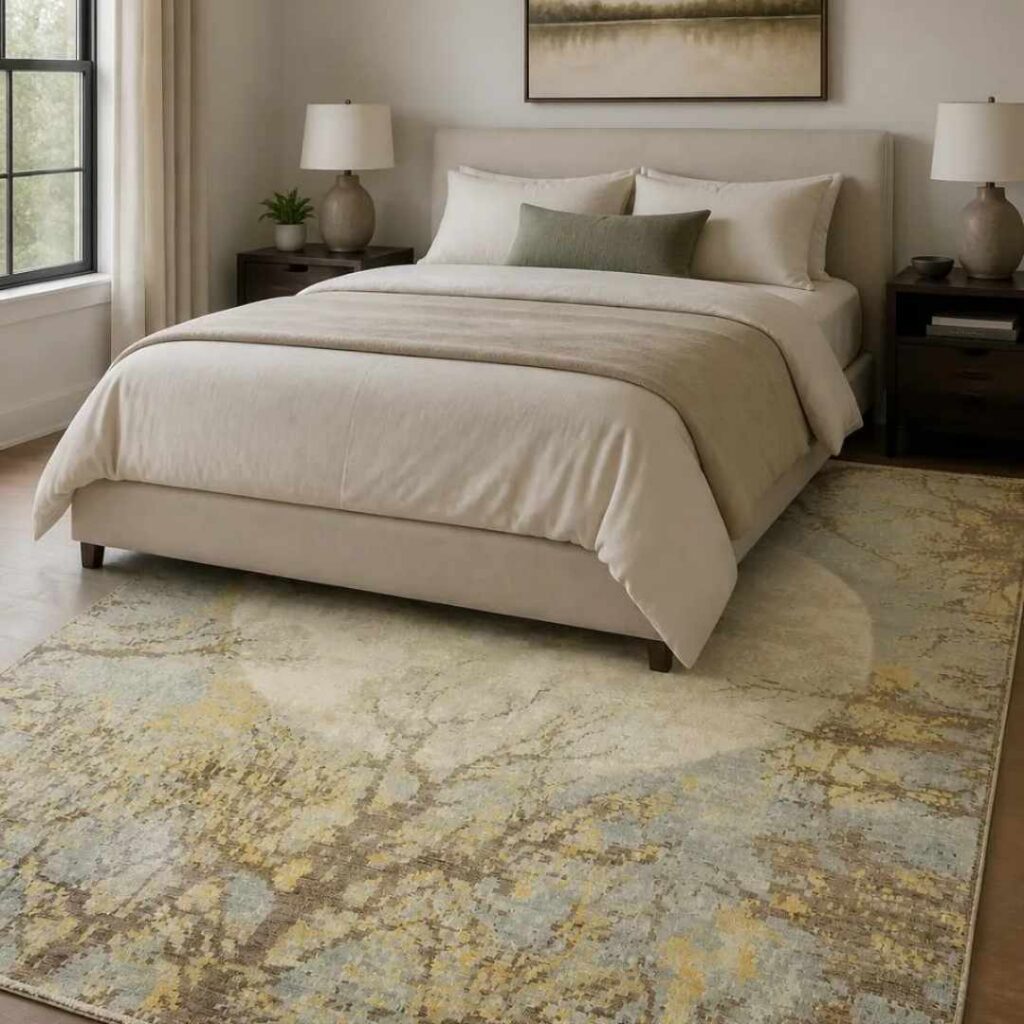
- Under the bed: Place a large rug under the bed, extending 2–3 feet beyond both sides and the foot of the bed.
- Queen bed: an 8×10 rug typically works.
- King bed: A 9×12 rug provides better coverage.
- Two-thirds under: For smaller rugs, place two-thirds of the rug under the bed, covering the foot and sides but leaving the headboard area rug-free.
- Runners: For smaller bedrooms or tighter budgets, use two runners on either side of the bed for symmetry and comfort.
This placement ensures balance while highlighting the bed as the focal point of the room.
Hallway and Entryway Rugs
Runners and entryway rugs are both functional and decorative.
- Hallways: Runners should leave a few inches of space (2–5 inches) on all sides, creating a frame of bare floor. They should follow the length of the hallway without overwhelming it.
- Entryways: Choose rugs that fit the space but allow doors to open and close freely. Durability is especially important here since entryways experience heavy traffic.
Durable materials like hand-knotted wool perform best in these high-use areas, maintaining beauty even with frequent wear.
Open Concept and Large Spaces
In open layouts, rugs are essential for defining zones. Without them, spaces can feel unfinished or cavernous.
- Use rugs to separate zones: Place one rug under the seating area and another under the dining table to visually distinguish the areas.
- Coordinate, don’t match: Rugs in adjacent areas should complement each other in style or color palette, but they don’t need to be identical.
- Oversized rugs unify: For very large spaces, oversized rugs (such as 10×14 or larger) help prevent furniture groupings from feeling lost.
This technique creates flow while maintaining definition in multifunctional rooms.
Common Rug Placement Mistakes to Avoid
Even the best rugs can look out of place if positioned incorrectly. Designers warn against these common errors:
- Too small: Rugs that only cover a coffee table or barely fit under a bed disrupt balance.
- Against the walls: Rugs that stretch wall-to-wall without borders lose definition.
- Ignoring furniture proportion: The rug should always relate to the furniture, not just the room size.
Avoiding these mistakes ensures your area rug enhances your home rather than distracting from it.
Rug Source’s Expertise and Collection

At Rug Source, we know that rug placement is just as important as design. That’s why we carry a wide range of rugs in sizes to fit every layout, from intimate bedrooms to expansive open-concept homes.
- For larger living and dining spaces, explore our collection of room-size rugs, available in 8×10, 9×12, and beyond.
- For versatile options, our curated area rug collection includes everything from traditional to modern styles, perfect for achieving designer-approved placement.
With our selection and expertise, you can feel confident that your rug will not only look beautiful but also fit seamlessly into your home.
Conclusion
Area rugs are more than accessories; they’re foundational design elements that shape how a room looks and feels. By following placement rules trusted by designers, leaving borders, anchoring furniture, and scaling rugs to fit each space, you can avoid common mistakes and create balance throughout your home.
At Rug Source, we believe the right rug placement turns a room from ordinary to exceptional. Whether you’re furnishing a cozy bedroom or an expansive open-concept living area, our selection of high-quality area rugs ensures you’ll find the perfect fit.
Ready to transform your home? Explore Rug Source’s area rug collection today and discover the perfect piece for your space.