Step Up Your Décor Game with Antique Turkish Rugs

Why Antique Turkish Rugs Are the Ultimate Décor Investment
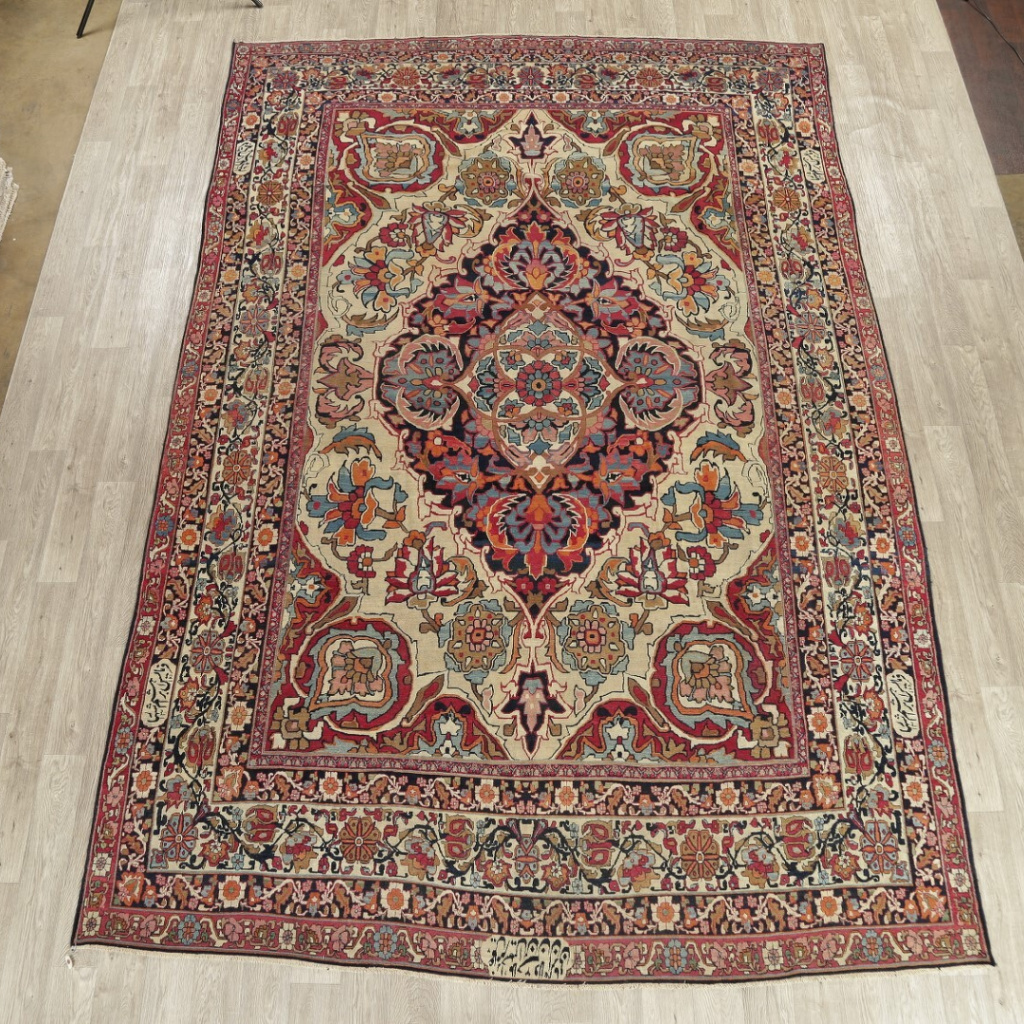
Antique Turkish rugs, handwoven textiles that are 100+ years old, deliver a level of history, craft, and character you simply can’t get from modern pieces. Woven across Anatolia in renowned centers such as Oushak, Bergama, Konya, and Kayseri, these works of art pair natural-dye palettes with the robust Ghiordes (Turkish) double-knot construction for beauty and longevity.
What sets authentic antique Turkish rugs apart:
- Verified age: At least a century old (woven in 1924 or earlier)
- Time-tested construction: Hand-knotted using the durable Ghiordes double knot
- Noble materials: Wool pile, often with natural dyes (madder red, indigo blues, occasional cochineal burgundy)
- Regional identities: Distinct aesthetics from Oushak florals to tribal Anatolian geometrics
- Investment potential: Scarcity + connoisseur demand can support long-term value
- One-of-one character: No two pieces are exactly alike
At Rug Source in Charlotte, NC, we’ve helped clients for more than two decades discover antique Turkish rugs that elevate rooms and stand the test of time, whether you’re after a softly faded Oushak for a living room, a collectible prayer rug, or a graphic Kilim runner.
Why Collectors (and Designers) Love Antique Turkish Rugs

Beyond décor, these textiles are cultural documents. Medallions, mihrab (prayer-niche) layouts, cypress “tree-of-life” forms, and protective diamonds encode stories from Ottoman court workshops to nomadic weaving traditions. With authentic pieces becoming rarer every year, collectors appreciate both the heritage factor and the enduring market demand for well-preserved examples.
How Old Is “Antique”?
In rugs, “antique” means 100+ years old. Earlier examples span:
- Seljuk-era survivals (13th century): Now museum rarities
- Ottoman golden age (15th–18th c.): Celebrated for refined drawing and luminous palettes
- 19th–early 20th c. village/town weaving: The backbone of today’s market in livable room sizes
For authoritative museum context and visual comparisons, browse the Metropolitan Museum of Art’s carpets and essays (external link below) and Britannica’s overview of Turkish carpets.
Materials, Knots & Motifs: What to Know
- Wool pile, cotton foundation: Highland Anatolian wool offers natural resilience (lanolin) and remarkable dye absorption.
- Ghiordes (Turkish) double knot: Wraps around two warps, producing a stable, long-wearing pile ideal for geometric or floral drawing. Typical antique Turkish KPSI ranges from ~90–220; combined with the double-knot, durability is excellent.
- Natural dyes & color stories:
- Madder reds (warm brick to raspberry)
- Indigo blues (inky to denim)
- Cochineal burgundies in finer pieces
These palettes mellow into the coveted, decorator-friendly tones designers love today.
Signature layouts: Central medallions, spacious open fields, mihrab prayer niches, meanders and palmettes, tribal diamonds, and zigzags. Each region interprets these differently.
Regional Masterpieces: A Quick Tour
Oushak (Uşak)
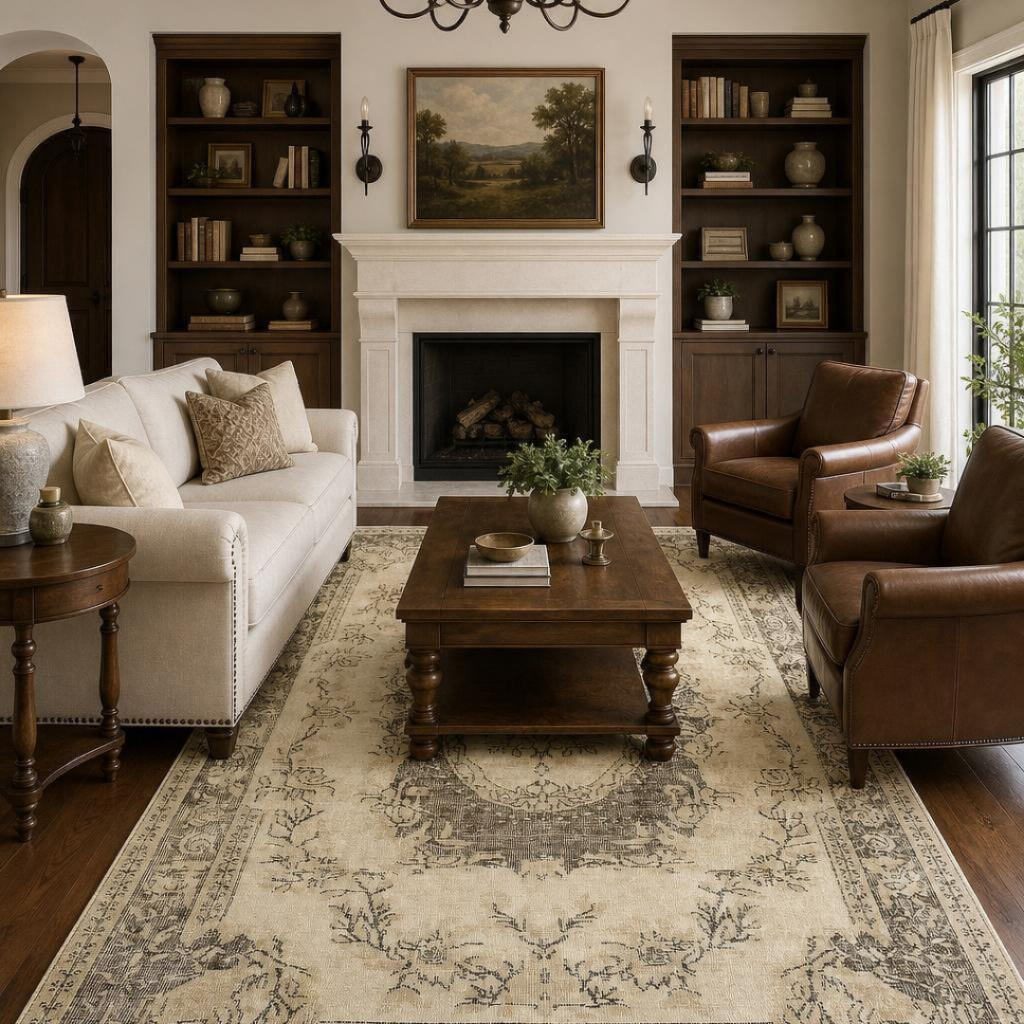
The decorator’s favorite: large formats (often 9×12 and up), softly strung palettes (peaches, celadons, ivory, soft gold), and angular floral palmettes on lustrous wool. Antique Oushaks play beautifully with both classic and modern interiors. Explore related styles in our Oushak Rugs and Turkish Rugs collections.
Anatolian Kilims
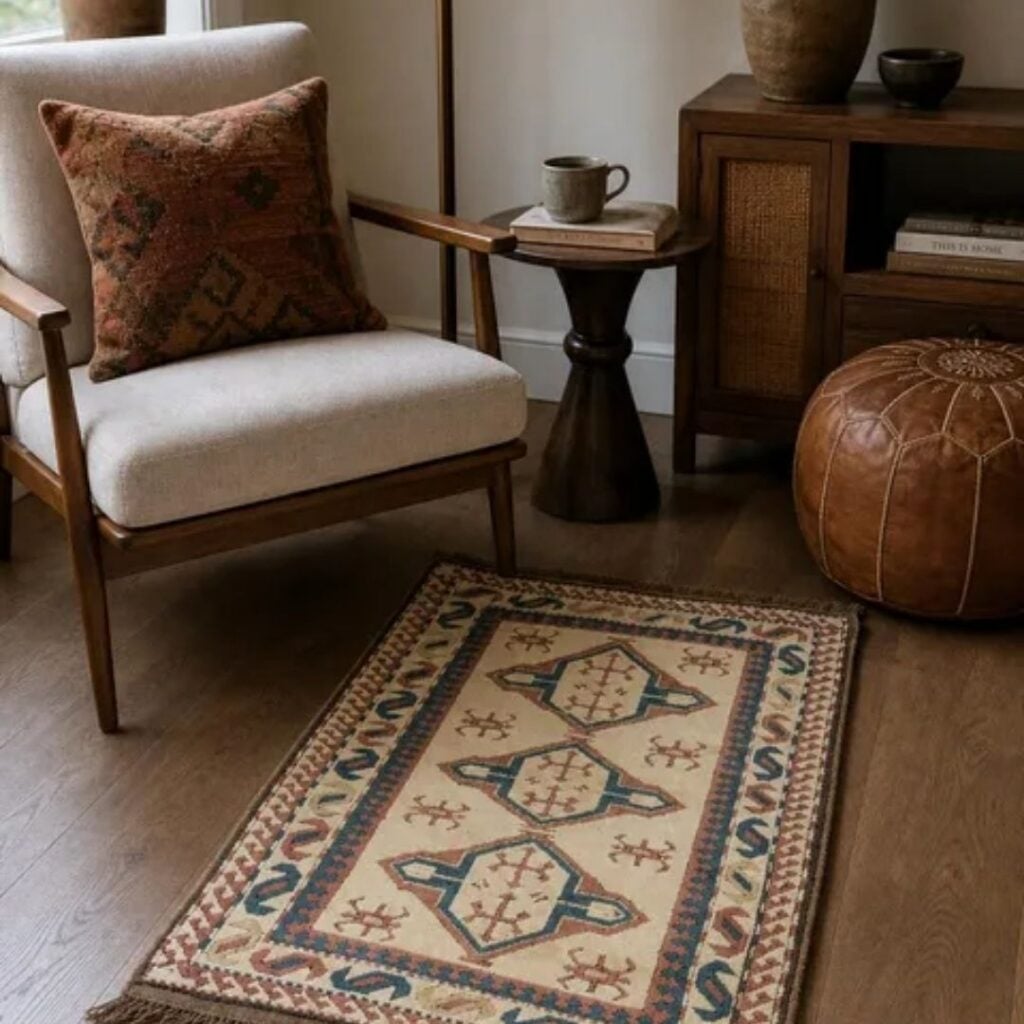
Flat-woven (no pile) textiles using slit-weave techniques for crisp geometrics, diamonds, hooks, and stair-step forms with symbolic meaning. Lightweight, often reversible, and surprisingly versatile as runners, wall hangings, or layered over a neutral base. See Kilim Rugs and Runner Rugs.
Tribal & Town Weaving
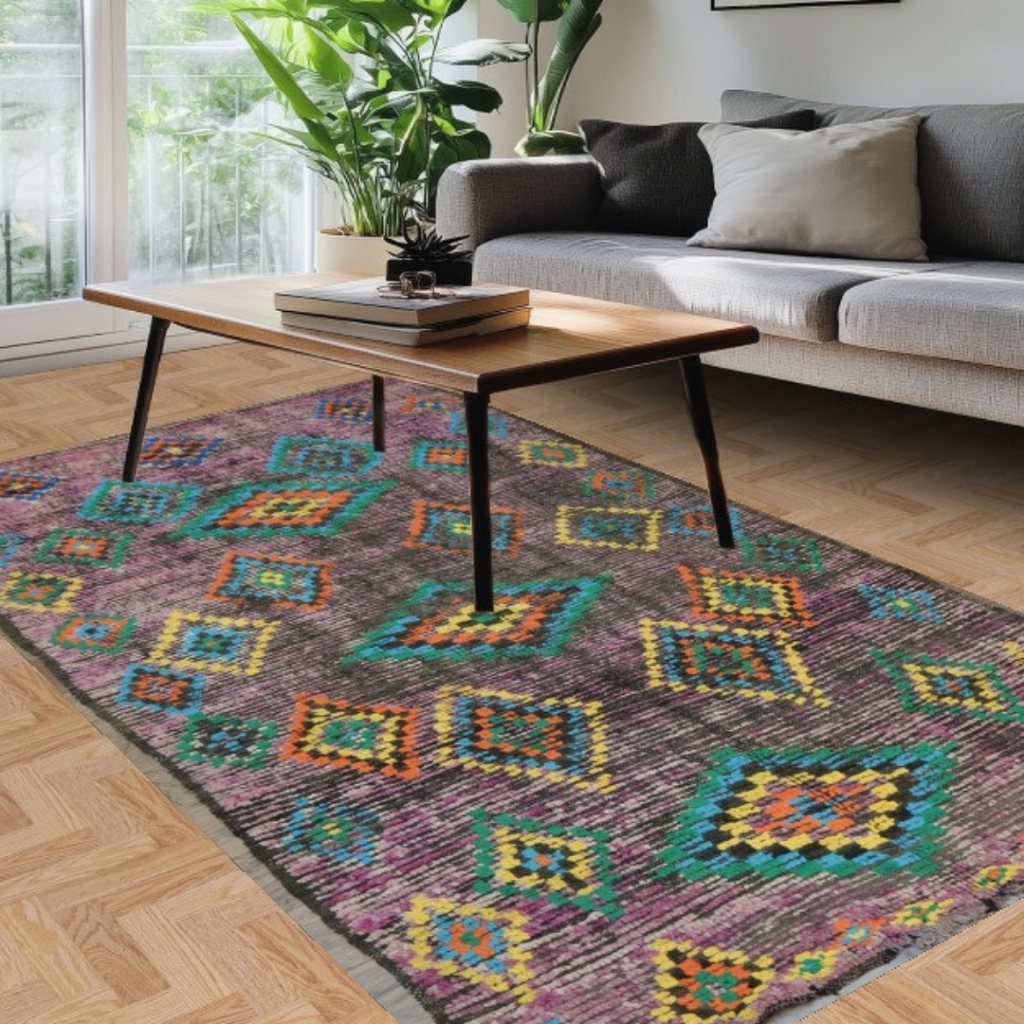
- Yörük (Yuruk) & other tribal groups: Spontaneous geometry, natural abrash, and soulful irregularities beloved by collectors.
- Town workshops (e.g., Sivas, Kayseri): More curvilinear drawing and refined borders; some include silk highlights.
Buying Guide: Value, Authenticity & Pricing
Price bands reflect age, condition, size, rarity, drawing quality, and dye integrity. Antique Turkish rugs can range from well under $1,000 for small, decorative “yastik” (pillow) pieces to $20,000+ for scarce, room-size masterpieces in excellent condition.
Authenticity Checklist (Fast but Telling)
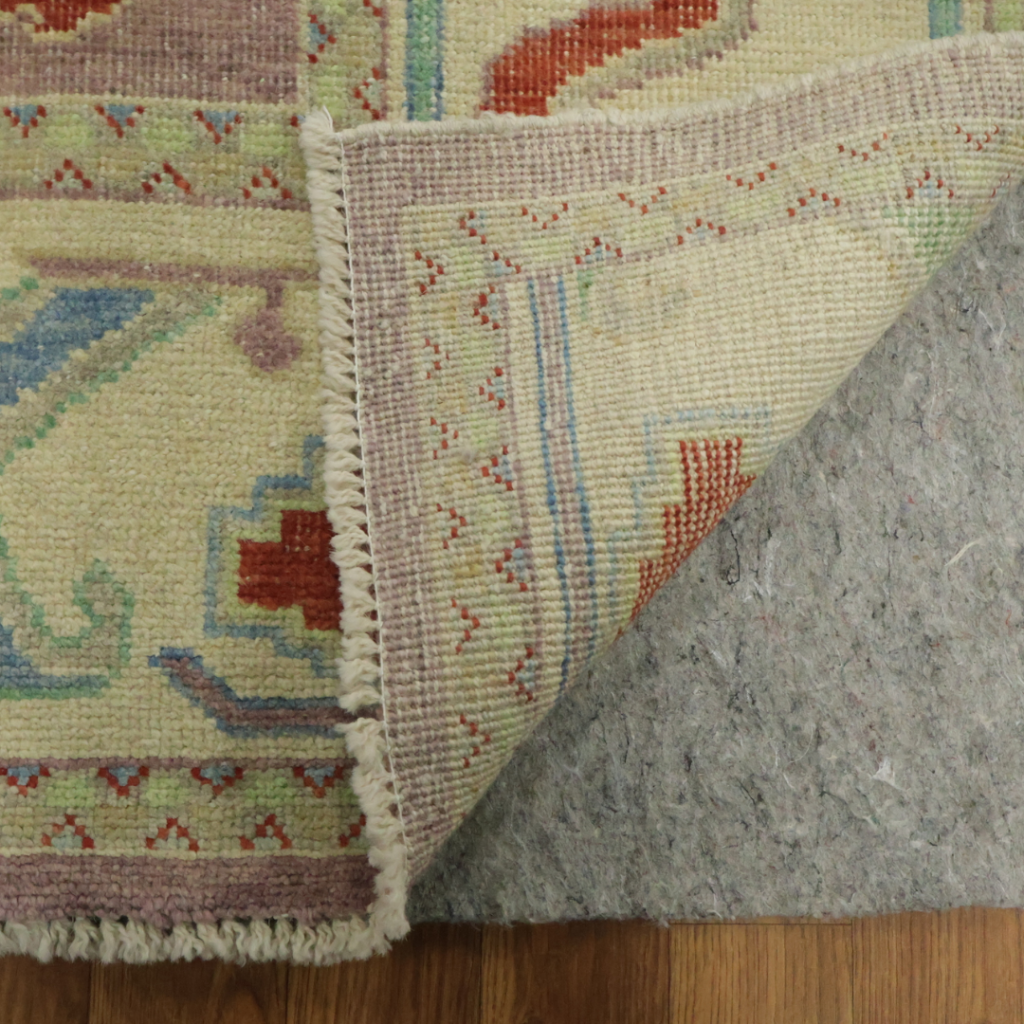
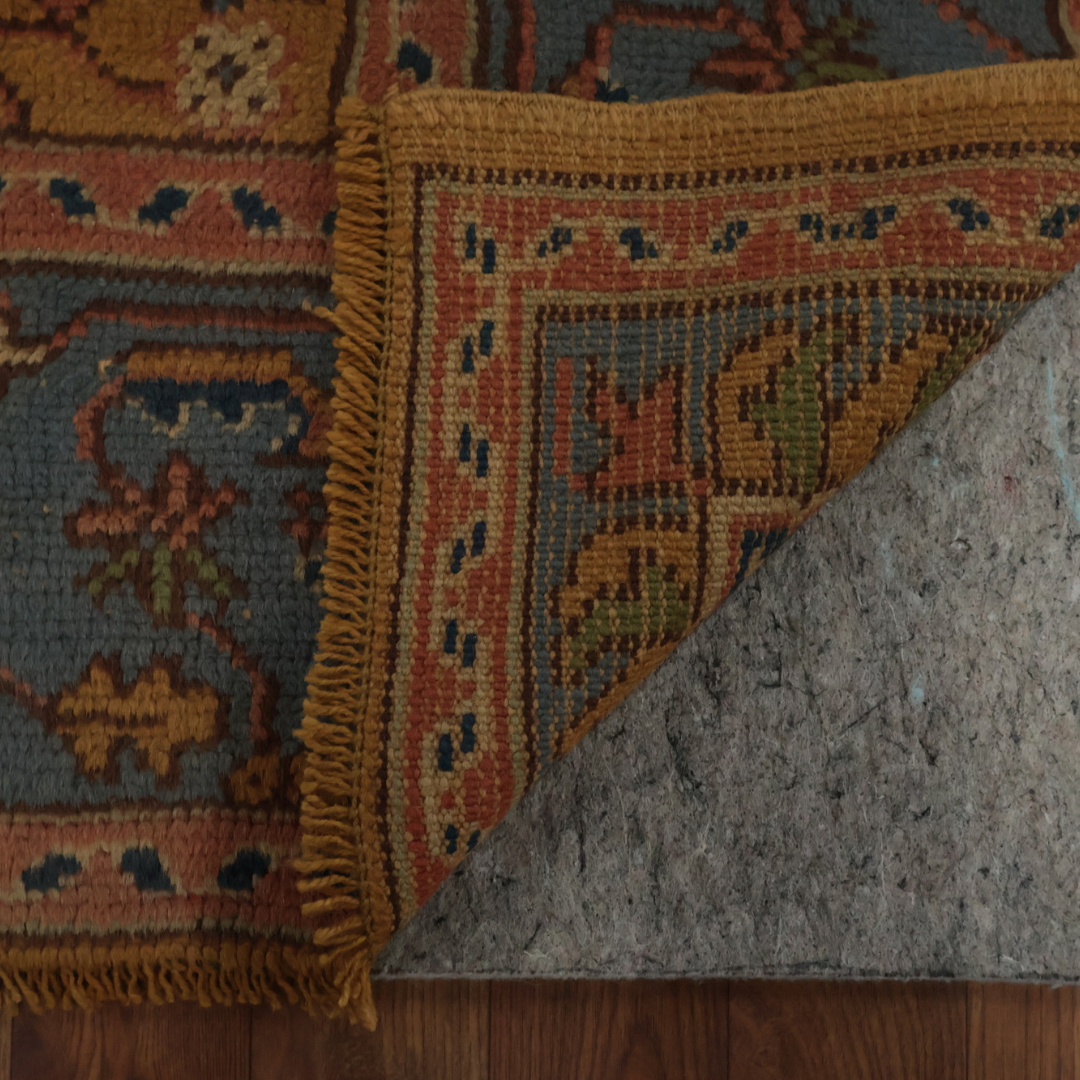
- Fringe = foundation: On hand-knotted rugs, fringe is the warp extended, not sewn on later.
- Back of the rug: You should see the pattern in miniature and feel individual knots with subtle irregularity, no latex mesh or stiff coating.
- Abrash: Gentle striations in color from hand-dyed batches signal authenticity, not a defect.
- Handle & sheen: Old wool develops a supple “hand” and a nuanced luster very different from shiny synthetics.
Condition & Restoration
- Excellent/original ends & sides command premiums.
- Honest, professional restoration (secured ends, minor re-piling) is normal and can preserve value; over-painting or harsh re-dyeing can hurt it.
New to the category? Compare antique vs. vintage vs. reproduction across sizes in our curated Antique Rugs and value-focused Clearance Rugs.
Styling Antique Turkish Rugs (Room by Room)
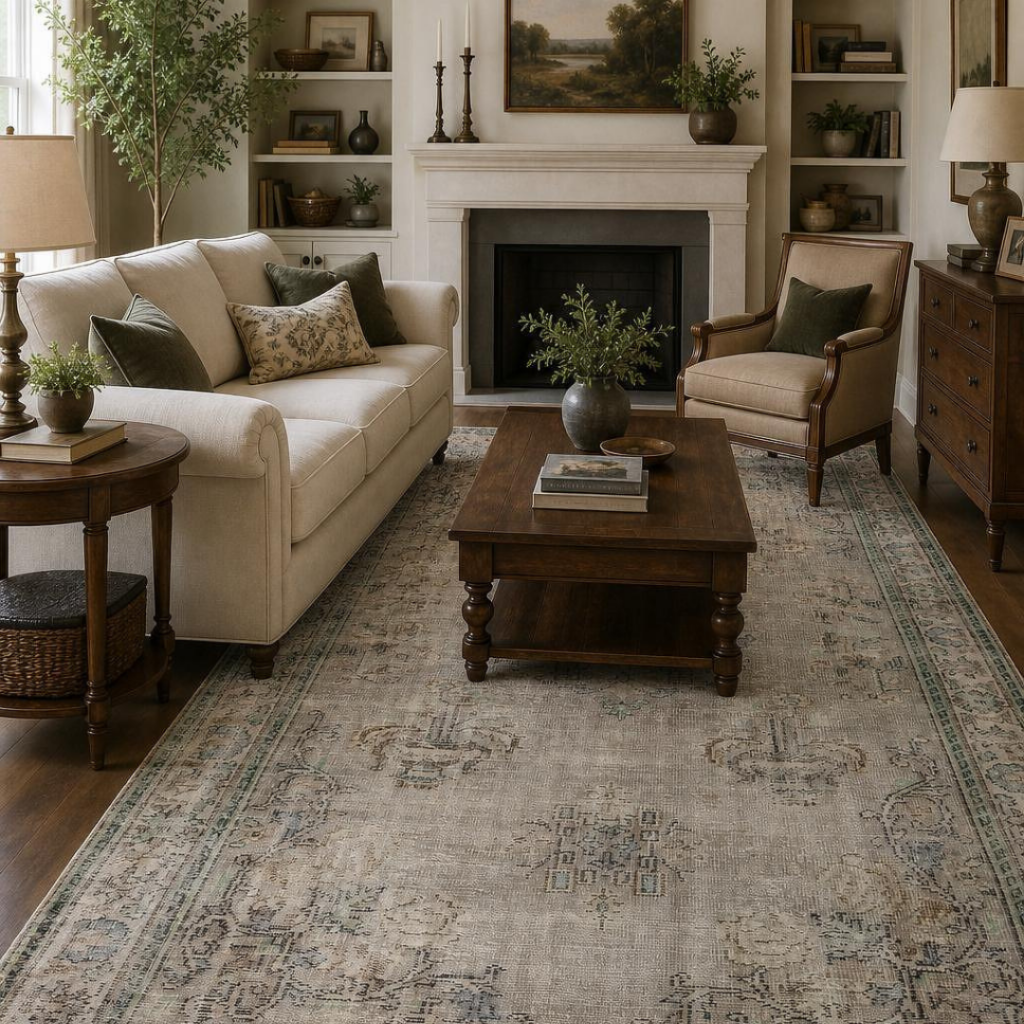
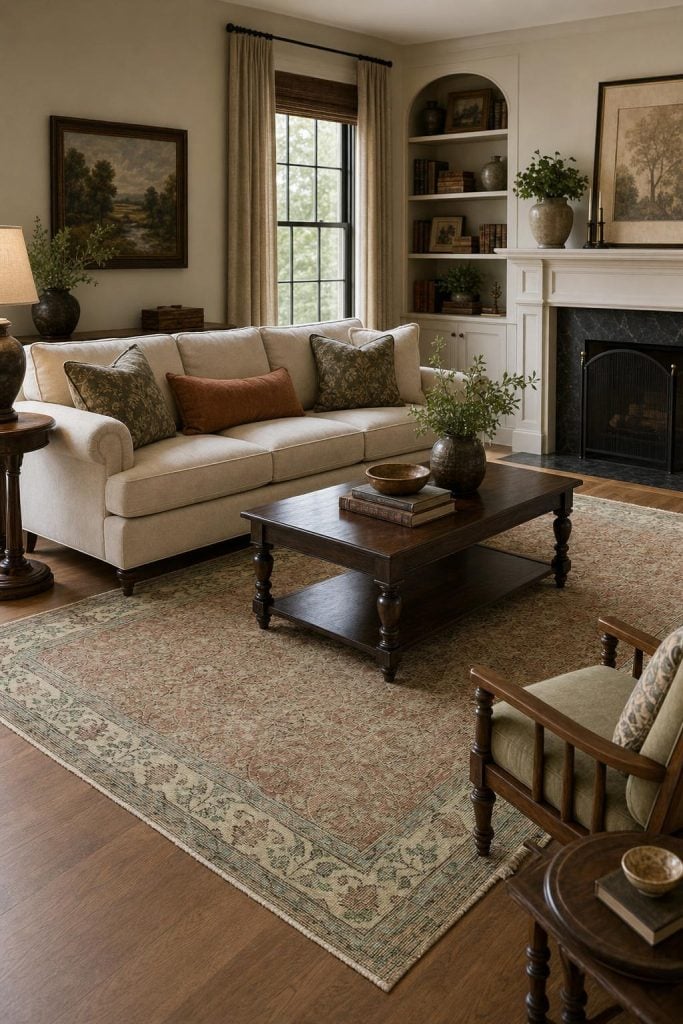
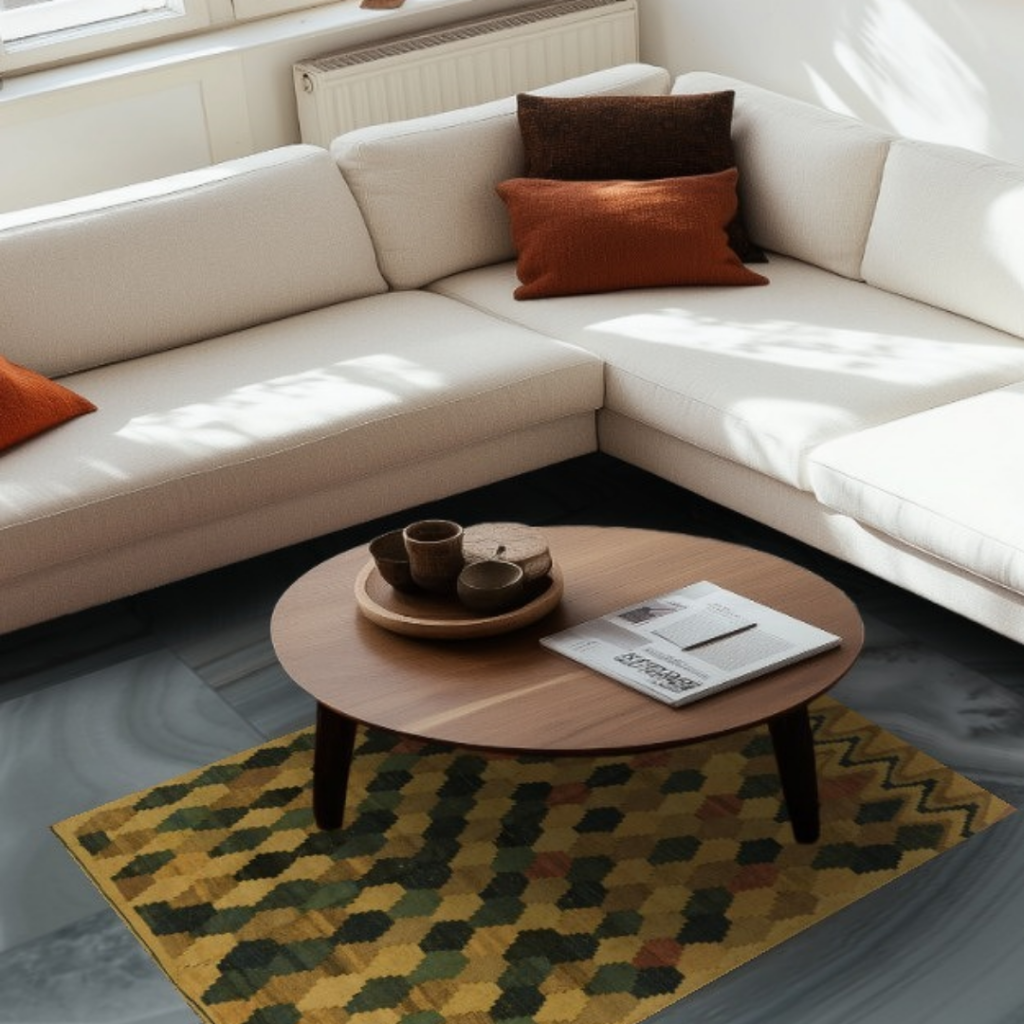
- Living rooms: A 9×12 Oushak anchors seating and softens hard lines; the open field keeps the space calm while the border frames the room.
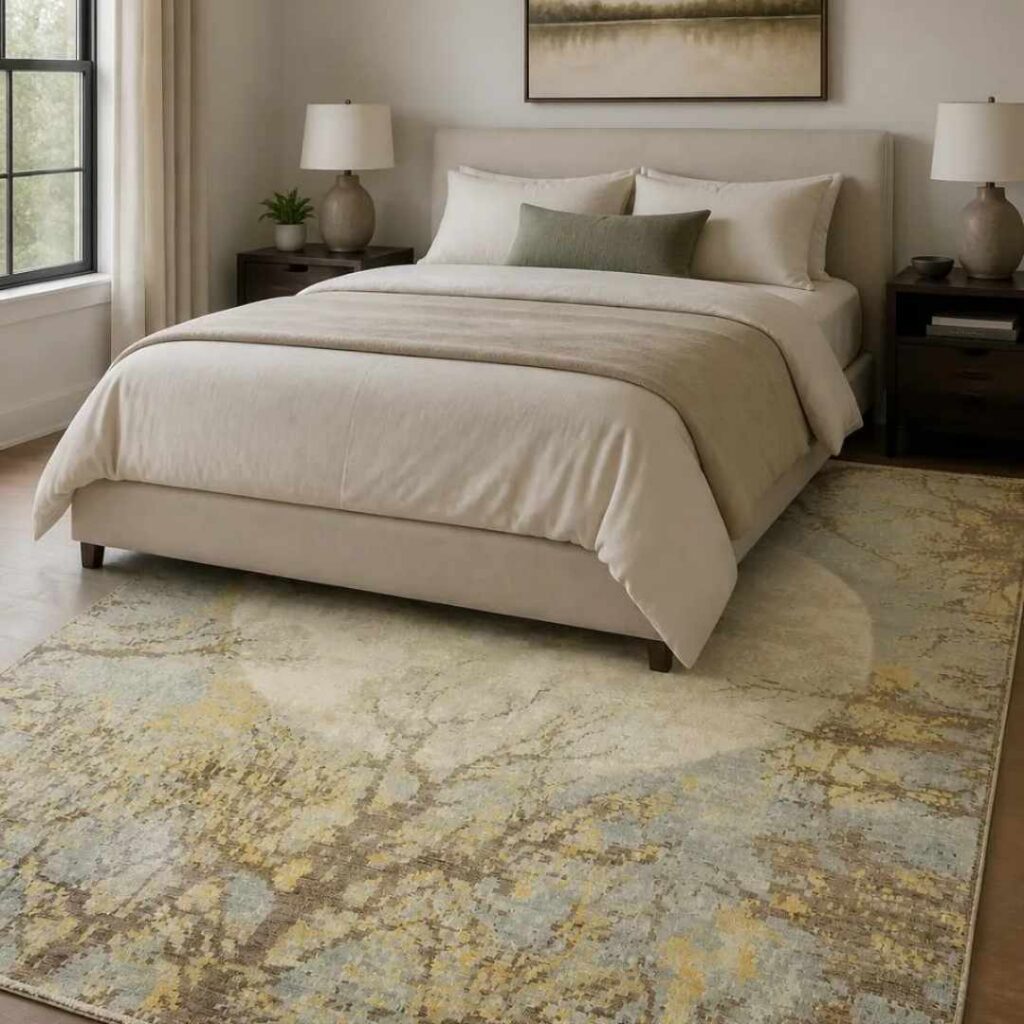
- Bedrooms: A 6×9 or 8×10 under the lower two-thirds of the bed gives warmth and symmetry; runners on each side add luxury.
- Hallways & kitchens: Flatwoven Kilim runners bring color and movement without adding bulk, great for chair glide and cleanup.
- Layering: Float a small antique kilim over a larger neutral jute or wool flatweave to protect the antique and add visual depth.
- Walls: Smaller prayer rugs and yastiks read like art; use a textile-safe hanging system.

Care, Cleaning & Preservation (Keep It Thriving for Decades)
- Vacuum smart: Suction only (no rotating beater bar), following pile direction.
- Rotate every 6–12 months: Balance traffic and light exposure.
- Rug pad is non-negotiable: Choose felt or felt+natural rubber to stabilize, cushion, and reduce wear.
- Professional washing: Every 3–5 years (or 2–3 in high traffic) by specialists experienced with antique wool and natural dyes.
- Sun management: Use blinds/UV films where the afternoon sun is strong to minimize color fade.
For ethical and historical context on handmade production and techniques, consult the Met Museum and V&A / Britannica resources.
Frequently Asked Questions
How do I tell an antique from a reproduction?
Check the back (individual knots visible), fringe (true warp), natural abrash, and the supple handle of old wool. Reproductions often have uniform backs, sewn-on fringe, and flat printed looks.
Do antique Turkish rugs appreciate?
Quality, scarcity, condition, and desirable sizes drive demand. While appreciation isn’t guaranteed, well-chosen antique Turkish rugs have historically held or improved value, especially iconic types (e.g., great room-size Oushaks, exceptional prayer rugs).
Are they practical for busy homes?
Yes especially wool-pile antiques with forgiving, melange palettes. Use a quality pad, vacuum with care, and schedule periodic professional cleaning.
What sizes are most versatile today?
8×10 and 9×12 anchor most living/dining rooms. Runners (2.5–3 ft × 8–12 ft) are hallway MVPs. Small yastiks excel as accents or wall art.
Conclusion & Next Steps
Antique Turkish rugs deliver timeless artistry, livable palettes, and lasting value all in one piece. They’re cultural heirlooms that make rooms feel collected, warm, and complete.
If you’re ready to bring home a rug with history and heart, we’re here to help. Browse our curated Turkish Rugs and Oushak Rugs, discover treasures in Antique Rugs, or shop smart values in Clearance Rugs. Near Charlotte? Visit our showroom for hands-on comparisons, fiber tests, and expert sizing advice.
Ready to transform your space? Explore Rug Source’s antique Turkish selection and find the piece that feels like it was woven just for your home.