

The Bakhtiari rugs are a unique type of Persian carpets, crafted by the Bakhtiari people of Iran’s southwestern province of Chahar Mahal and Bakhtiari. These hand-knotted rugs are made using mostly natural fibers, such as wool and cotton, and feature intricate patterns inspired by the nomadic, tribal lifestyle of the Bakhtiari people. Since the early 20th century, these carpets have been highly sought after and now serve as prized centerpieces of many art and antique collections around the world.
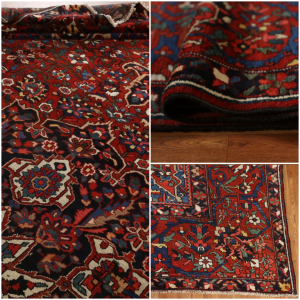
The Bakhtiari people, who call themselves the “Lurs” after the city of Luristan in Western Iran, have lived a nomadic lifestyle since ancient times. Nomadic life is deeply rooted in the Bakhtiari culture, and so is weaving carpets. While weaving various rugs, the Bakhtiari women developed their own unique style and created detailed patterns that represent the different stories, traditions, and lifestyles of their tribe.
These bright, vibrant, and timeless carpets are known for their vibrant colors, expressive motifs, and geometric shapes, such as lozenges, hexagons, diamonds, and stars. Bakhtiari carpets feature warm, bold hues, typically in red, orange, yellow, and blue, and are dominated by large central medallions surrounded by intricate, finely detailed floral patterns.
The geometric patterns are largely inspired by nature and include floral motifs featuring pine cones, birds, trees, and poppies, as well as symbols such as rams, fish, and scorpions.
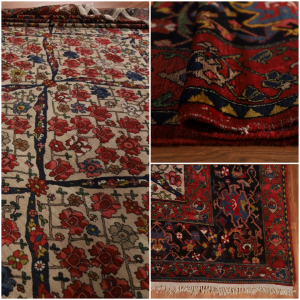
The classic Bakhtiari rugs are known for their exceptional quality, which can be attributed to the skillful dyeing and knotting techniques used by the weavers, as well as the top-quality natural wool and cotton used — two materials that were readily available when the Bakhtiari’s weaving industry was flourishing. The weavers used natural dye derived from fruits, vegetables, flowers, and other plants found in the nearby region, which gave these carpets their unique and vibrant colors.
The Bakhtiari carpets developed in relative obscurity in the early 20th century but have since become highly sought-after. The craftsmanship and design of the rugs drew inspiration from a variety of other cultures and styles, such as Kurdish and Caucasian carpets, as well as classic Turkmen and Persian rugs.
Today, Bakhtiari carpets are considered collectibles and are found in antique shops and art galleries around the world. They’re admired for their natural beauty, intricate craftsmanship, and timeless aesthetic. And it’s this combination of characteristics that makes them special, making them a classic choice for home décor, no matter the style.
Types of Bakhtiari Rugs
Bakhtiari rugs are a type of Persian rug woven by the Bakhtiari tribe, which is one of the largest and most prominent nomadic tribes in Iran. There are several types of Bakhtiari rugs, each with its own unique characteristics:
- Garden Bakhtiari. These rugs are characterized by their floral motifs, which are inspired by the gardens of the Bakhtiari region. They typically have a cream or ivory background with a wide range of colors in the floral patterns.
- Bibibaff. These rugs are known for their geometric designs and bright colors. They are often made with wool from the local sheep, which gives them a thick and durable texture.
- Chal. Chal rugs are made using the Turkish knot technique, which results in a finer weave and more intricate patterns. They are often made of silk, which gives them a luxurious feel.
- Saman. Saman rugs are similar to Chal rugs, but they are woven with a more open weave and have a coarser texture. They are often made with wool from the local sheep and have simple geometric patterns.
- Zili-Sultanabad. These rugs are named after the city of Sultanabad, which was a major center for rug production in Iran. They are known for their bold colors and large, floral designs.
- Loribaft. Loribaft rugs are made using a blend of wool and silk, which gives them a soft and luxurious texture. They are known for their intricate designs, which often include floral motifs and geometric patterns.
What are the traditional designs and colors of Bakhtiari rugs?
Bakhtiari rugs are one of the most famous types of Persian rugs, named after the Bakhtiari tribe, who are known for their weaving skills. The traditional designs and colors of Bakhtiari rugs can vary depending on the region and the weaver, but there are some common elements that are often seen in these rugs.
Designs:
- Bakhtiari rugs typically feature a central medallion design surrounded by a field of intricate floral or geometric patterns.
- Some Bakhtiari rugs have an all-over pattern, with no central medallion.
- The borders of Bakhtiari rugs are often decorated with a series of smaller motifs, such as flowers, leaves, or vines.
Colors:
- The color palette of Bakhtiari rugs is typically rich and vibrant, featuring bold hues of red, blue, green, and gold.
- Some Bakhtiari rugs also feature softer colors, such as beige or cream, mixed with brighter shades.
- The colors used in Bakhtiari rugs are often derived from natural dyes, such as indigo, madder root, and pomegranate skin, which can create a range of beautiful shades and variations in color.
What are the most popular Bakhtiari rug patterns?
Bakhtiari rugs are a type of Persian rug known for their intricate patterns and high-quality craftsmanship. They are produced by the Bakhtiari tribe, which is located in the Chahar Mahaal and Bakhtiari provinces in western Iran. Some of the most popular Bakhtiari rug patterns include:
- Garden design. This pattern is characterized by a central medallion surrounded by floral motifs, vines, and animals. It is inspired by the Persian garden, which is a symbol of paradise.
- Herati design. This pattern features a diamond-shaped medallion in the center with curved leaves and rosettes. The design is repeated throughout the rug, creating a geometric and symmetrical pattern.
- Shah Abbasi design. This pattern is named after the Safavid king Shah Abbas I, who was a patron of the arts in the 16th century. It features a central medallion surrounded by flowers, leaves, and vines.
- All-over design. This pattern features a repeating pattern of floral motifs, leaves, and vines covering the entire surface of the rug.
- Lattice design. This pattern features a lattice-like grid with floral motifs and animals inside each compartment. The lattice can be diamond-shaped or square-shaped.
- Tree of Life design. This pattern features a central tree with branches spreading out to the edge of the rug. The tree is often depicted with birds, animals, and flowers.
These are just a few examples of the many patterns used in Bakhtiari rugs. Each rug is unique, with its own combination of colors, designs, and motifs.
Check our inventory, and find the perfect Bakhtiari Rug for your home!